poetcore reading nook ideas
Some corners of the home are for living; others are for dreaming. These poetcore reading nook ideas will help you carve out a small sanctuary devoted to poetry, reverie and slow afternoons with a book in hand. Poetcore is dark academia’s softer, more romantic sibling: think well-worn classics, candlelight, dried flowers, handwritten verses and textures that beg to be touched. Whether you have a whole bay window or just an armchair’s worth of space, here is how to build a nook worthy of your inner poet.

What Is Poetcore, Exactly?
Poetcore is an aesthetic built around the romantic life of the mind: poetry, letters, pressed flowers, vintage books and the quiet drama of a rain-streaked window. Where dark academia can feel scholarly and severe, poetcore is tender and emotional, all about feeling deeply and living beautifully. It is less about the library and more about the garret where the poems get written.
In interiors, poetcore translates to layered, storied spaces: dark woods, aged brass, velvet and linen, shelves of beloved books, candles everywhere and personal artefacts that look collected rather than decorated. A poetcore reading nook should feel like it evolved over years, even if you built it in a weekend.

Finding Your Nook’s Perfect Spot
The best reading nooks borrow their magic from their location. A bay window with a deep sill is the dream, offering natural light by day and a view of the weather by night. An unused alcove, the end of a hallway, a corner of the bedroom or even a spacious wardrobe can all become nooks with the right treatment.
Look for somewhere with a sense of enclosure: poetcore thrives on intimacy. A spot flanked by walls on two sides, tucked under stairs or framed by curtains feels instantly more nook-like than an exposed corner. If your space is open, create enclosure with a bookshelf, a screen or a draped curtain.
Consider the light at different times of day. You will read here in daylight and lamplight, so the spot needs both a window or bright position and space for a good reading lamp. Visit your candidate corners morning and evening before committing.

The Essential Armchair
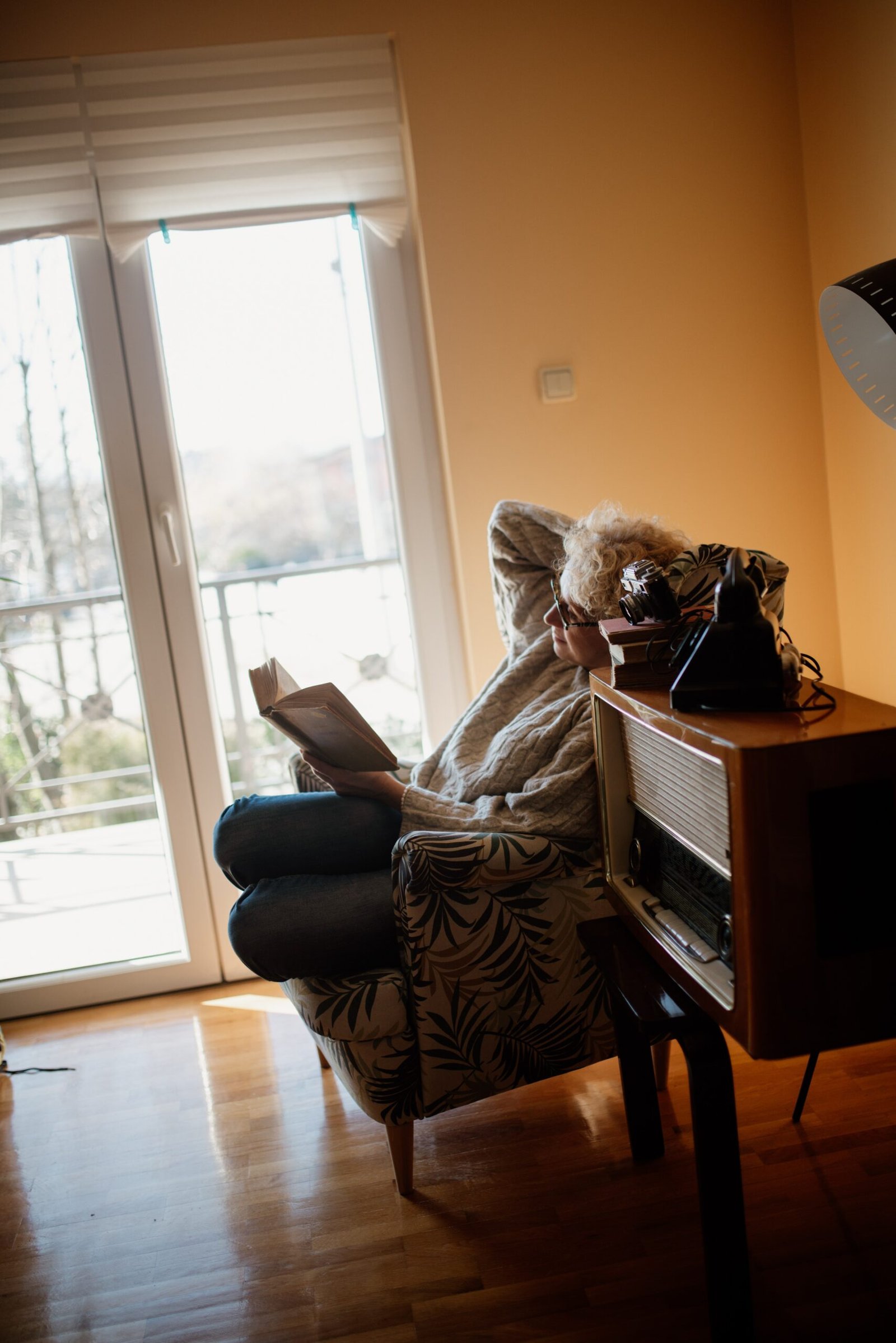
Every reading nook needs a throne, and for poetcore that means something with character: a secondhand leather armchair with a beautiful patina, a velvet boudoir chair in deep green or burgundy or a capacious wingback that swallows you whole. Comfort is non-negotiable; you will spend hours here.
Do not overlook the humble secondhand shop. The best poetcore chairs are the ones with history: worn arms, faded velvet, the ghost of a thousand previous readers. A throw and a cushion can disguise any number of sins while adding your own layer to the story.
Test before you commit: sit, curl up, put your feet up. A chair that looks perfect but forces you upright will gather dust, while an ugly-but-comfortable chair will become the most loved seat in the house. Comfort first, character a close second.

Layering Textiles for Maximum Cosiness
Poetcore is a maximalist when it comes to textiles. Start with a soft rug underfoot, add a throw draped over the chair arm, pile on cushions in velvet, linen and aged damask and finish with a smaller cushion for lumbar support during long reading sessions. The nook should feel like being wrapped in a poem.
Choose a palette of deep, literary tones: forest green, oxblood, ink navy, antique gold and warm cream. These colours feel like old book covers and candlelight, and they hide the wear of daily use gracefully. Mix patterns freely; poetcore celebrates the collected, not the matched.
Include one truly luxurious textile: a cashmere throw, a vintage quilt or a piece of embroidered linen. It is the detail your hands will find in the dark, and it makes the whole nook feel precious.

Lighting: Candles, Lamps and Golden Glow
Lighting sets the poetcore mood more than anything else. A good reading lamp is essential: brass or bronze, with a warm bulb and a shade that directs light onto the page without glare. Position it over your shoulder, not in your eyeline, for comfortable long sessions.
Then add the romance: candles in clusters of varying heights, fairy lights in glass jars, a salt lamp’s amber glow. Candlelight is poetcore’s native illumination, so be generous. Battery-operated candles give the flicker without the fire risk, perfect for nooks near curtains or books.
Keep overhead lighting off in the nook whenever possible. Pools of warm, low light against surrounding dimness create the intimate, contemplative atmosphere that makes poetcore so seductive. Your nook should glow like a secret.

Styling Your Book Collection
Books are both the purpose and the decoration of a reading nook. Arrange them with a poet’s eye rather than a librarian’s: stack some horizontally, lean others at angles, leave breathing room for small objects. Colour-grouping creates a beautiful ombré effect; chronological or thematic grouping tells a story.
Display your most beloved volumes face-out, like art. A beautiful cover deserves to be seen, and face-out books invite picking up in a way that spines never do. Rotate the display with your current reads to keep the nook feeling alive.
Do not hide the well-loved and worn. Cracked spines, pencilled margins and faded covers are poetcore credentials, proof of a life spent reading. A pristine, untouched collection is the only real faux pas here.

Writing Corners Within the Nook
A true poetcore nook invites writing as well as reading. Tuck a small side table or lap desk beside the chair with a beautiful notebook, a decent pen and perhaps a vintage typewriter for atmosphere. The tools of writing, left casually to hand, suggest a life of reflection.
Keep a “commonplace book” in the nook: a notebook for copying out lines that strike you, jotting observations or pressing a flower between pages. It becomes a personal artefact over time, and the habit of writing things down deepens the whole reading experience.
You do not need to be a poet to keep a poet’s notebook. Copying out a single beautiful sentence a day is a meditation, and your future self will treasure the record of what moved you.

Dried Flowers and Botanical Touches
Fresh flowers are lovely but demanding; dried flowers are poetcore’s true botanical love. Bunches of dried lavender, gypsophila, wheat and eucalyptus in vintage bottles or ceramic vases add texture, muted colour and a faint, nostalgic scent. They last for months and only grow more beautiful as they fade.
Press flowers between the pages of heavy books for future projects, or frame particularly lovely specimens in simple glass frames. A wall of framed pressed flowers above the nook is breathtaking and deeply personal.
Hang a small bunch of dried herbs or flowers from a hook beside the chair, where you can touch and smell them as you read. Sensory details like this are what elevate a corner with a chair into a genuine sanctuary.

Vintage Finds and Thrifted Treasures
Poetcore cannot be bought new; it must be found. Charity shops, flea markets and antique fairs are your hunting grounds: brass candlesticks, leather-bound books, old frames, inkwells, letter openers, globes and busts. Look for objects with patina and presence, things that look like they have stories.
Shop with no fixed list and an open eye. The best poetcore objects are the ones you did not know you needed: a tiny oil painting of a moody landscape, a stack of handwritten letters, a magnifying glass, a pocket watch that no longer ticks. Let the objects choose you.
Display finds in loose, artful clusters rather than formal arrangements. A stack of books topped with a candlestick, a frame leaning against the wall, a vase of dried flowers beside them: composed but casual, like the room arranged itself.

Window Nooks: The Ultimate Dream
If you are blessed with a deep windowsill or bay window, you have the raw material for the ultimate poetcore nook. Build or buy a window seat with storage beneath, top it with a thick custom cushion and pile on the textiles. The window becomes both light source and entertainment: rain, sunsets, street life, seasons.
Dress the window itself poetically: sheer linen curtains that billow, a trailing plant on the sill, a small stack of books within arm’s reach. A window nook is for watching the world as much as for reading, so orient the seat to enjoy the view.
Add a throw within grab distance and a small side table for tea. There is no greater luxury than a rainy afternoon, a good book and a window seat built for exactly that.

Small-Space Poetcore Nooks
No spare corner? A poetcore nook can be a single armchair pulled up to a bookshelf with a floor lamp behind it. The formula is simple: seat plus light plus books plus textiles, arranged with intention. Even the end of a bed or a landing can work.
In tiny spaces, go vertical: tall narrow bookcases, wall-mounted lamps and art hung high draw the eye up and make the nook feel like a complete world. A curtain on a tension rod can carve a nook out of a studio flat in seconds.
The smallest nooks often feel the most poetcore, because intimacy is the whole point. A chair that barely fits, books stacked on the floor, candlelight: it is not a compromise, it is the aesthetic at its purest.

Tea, Coffee and Nook Rituals
A reading nook deserves its rituals. Keep a small tray nearby with your preferred vessel, a teapot or cafetière and a tin of something good. The act of brewing becomes the threshold ritual that marks the transition from busy day to reading time.
Choose a dedicated nook mug, something beautiful and slightly impractical, and let it live in the nook. Add a small plate for biscuits, because poets need sustenance, and a cloth napkin because beauty matters even in small things.
Rituals turn a corner into a practice. Light the candle, brew the tea, open the book: the sequence tells your mind it is time to slow down, and after a while the nook itself will start to calm you on sight.

Art and Poetry on the Walls
Walls around a poetcore nook should feed the imagination. Frame favourite poems in beautiful typography, hang moody landscape prints, old maps, botanical illustrations or portraits with soulful eyes. A gallery wall of small, storied pieces beats one large bland print every time.
Include your own words: frame a handwritten poem, even if the handwriting is imperfect, especially if it is. Personal artefacts are what separate a styled corner from a genuine sanctuary. Pin up postcards, ticket stubs and notes from friends among the art.
Leave some wall bare. Poetcore needs breathing room for the eye to rest, and a single perfect frame on an empty stretch of wall can be more powerful than a crowded arrangement.

Sound, Scent and Atmosphere
Atmosphere is multisensory. A small speaker hidden among the books can play rain sounds, crackling fireplaces or soft classical music, wrapping the nook in its own weather. Scent matters too: old books, beeswax candles, dried lavender and woodsmoke are the perfumes of poetcore.
Choose one signature scent for the nook, perhaps a particular candle you only burn there, so the smell becomes associated with reading time. Scent is powerfully linked to memory and mood; your nook’s perfume will start to calm you before you even sit down.
Keep the soundscape gentle and the scents subtle. The goal is a background hum of beauty, not a sensory assault. Less, but better, is the poetcore way.
Seasonal Styling for Your Nook
A poetcore nook should breathe with the seasons. In autumn, add conkers, dried leaves and a heavier throw; in winter, deepen the candlelight and bring in evergreen sprigs. Spring calls for the first fresh blossoms in a bud vase; summer for open windows and lighter linens.
These small seasonal shifts keep the nook feeling alive and give you reasons to tend it lovingly through the year. A nook that never changes starts to feel like a museum; one that evolves feels like a garden.
Mark the changing of the seasons as its own little ritual: an afternoon spent refreshing the nook, choosing new poems for the wall, swapping the throw. It is caretaking as meditation.

Poetcore Nooks for Two
Reading is often solitary, but nooks can be shared. A loveseat instead of an armchair, two chairs angled towards each other or a chaise longue wide enough for two turns the nook into a place for reading aloud, long conversations and companionable silence.
For couples or close friends, add a second lamp and a shared side table. Reading side by side, occasionally sharing a line that struck you, is one of life’s great quiet pleasures. The nook becomes a relationship space, not just a personal one.
Keep the textiles generous enough for two: an extra throw, cushions to share. A nook built for two says that slowness and beauty are things you want to share, which is rather poetic in itself.

Budget Poetcore: Thrifted, Not Bought
Poetcore is the most budget-friendly aesthetic there is, because its soul is secondhand. A charity-shop armchair, flea-market brass, library-sale books and candles from the pound shop can build a breathtaking nook for very little. Money cannot buy patina; only time and use can.
Prioritise the chair and the lamp, since comfort and light are functional, and thrift everything else. Books are cheapest at library sales and charity shops; textiles can come from vintage linens, old curtains repurposed as throws or even beautiful scarves as wall hangings.
The constraint is the point. A nook assembled slowly from found things has a soul that a shopping-spree nook never will. Enjoy the hunt; it is half the pleasure.

Keeping the Nook Tidy (Enough)
A poetcore nook should look lovingly lived-in, not actually chaotic. Build in hidden tidiness: a basket for the current reads, a lidded box for pens and bits, a tray that corrals the tea things. Contained clutter reads as cosy; scattered clutter reads as mess.
Do a five-minute reset each evening: stack the books, fold the throw, blow out the candles. This tiny ritual keeps the nook inviting and means it is always ready when the reading mood strikes. A nook buried under yesterday’s debris gets avoided, not used.
Accept a certain beautiful disorder as part of the aesthetic. A few open books, a shawl trailing off the chair, a half-finished cup of tea: these are signs of life, and poetcore is all about a life fully felt.

What to Read in Your New Nook
Christen the nook with something worthy of it. The Romantics are the obvious choice: Keats for beauty, Shelley for passion, Wordsworth for nature. But poetcore reading is broad: Mary Oliver for attention, Rumi for the soul, contemporary collections for the now.
Mix poetry with prose that reads like poetry: Woolf, Brontë, Morrison, Ondaatje. Keep a “nook shelf” of books that belong to the space, volumes you return to rather than read once. These become old friends, their spines familiar as faces.
Read slowly here. This is not the place for skimming or productivity; it is for savouring. One poem, read twice, is a better nook session than a hundred pages rushed.

Begin Your Poetcore Chapter
A poetcore reading nook is more than decor; it is a declaration that slowness, beauty and inner life matter. In a world that rewards speed, building a corner devoted to poetry is a quietly radical act. Every candle lit, every page turned, is a vote for a different pace.
Start where you are, with what you have. A chair, a lamp, a book and a blanket are enough to begin; the layers will accumulate naturally as you live with the space. Let it grow like a poem, line by line.
Pin your favourite ideas, pour the tea and take your seat. Your nook is waiting, and so are all the poems you have not met yet.


I am Talha Sikandar, a professional writer with a passion for general blogging. With years of experience in content writing and research, I founded Meaniingly.com to deliver well-researched, informative, and user-friendly articles on diverse topics.