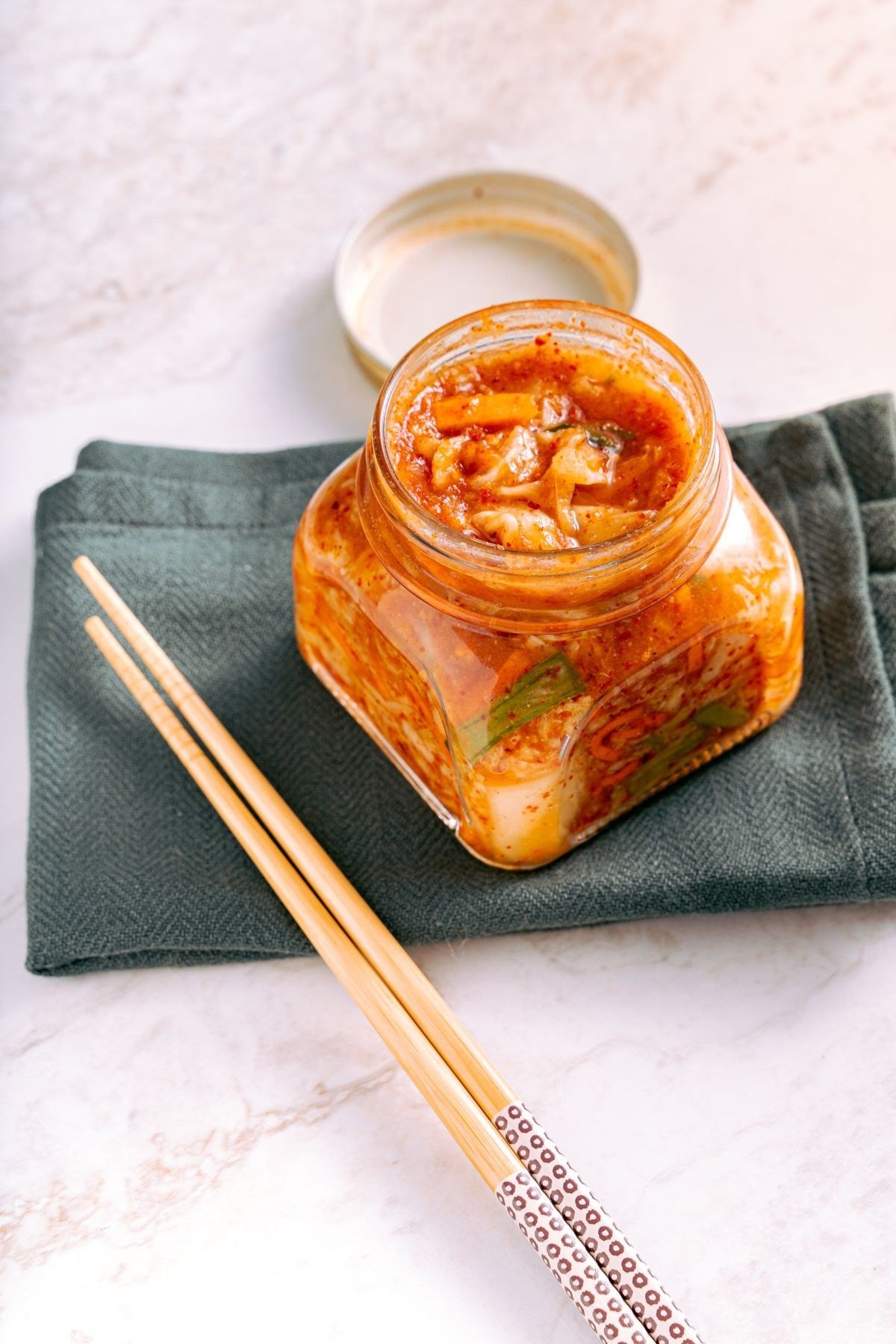
Fermented cabbage recipe
Fermented cabbage, often known as sauerkraut, is one of the oldest and simplest preserved foods, made from just cabbage and salt. Over days and weeks, natural fermentation transforms crunchy cabbage into a tangy, flavourful condiment that keeps for months. It requires no special equipment, no cooking and surprisingly little active time.
This guide shares a complete fermented cabbage recipe in twenty sections, from choosing cabbage and measuring salt to packing jars, monitoring fermentation and serving your finished kraut. Each section includes practical tips and troubleshooting advice. With patience and a little care, your first batch can be a complete success.
Choosing the Right Cabbage

Good fermented cabbage starts with fresh, firm, heavy cabbage heads. Choose green or white cabbage that feels dense for its size, with crisp outer leaves and no soft spots. Fresh cabbage contains more natural moisture, which helps create the brine that drives fermentation.
One medium head, around one kilogram, makes a good first batch, filling a litre jar comfortably. Avoid cabbage that looks wilted or damaged, since it produces less brine and ferments unevenly. Organic or garden-grown cabbage works beautifully, but any fresh cabbage will succeed.
Red cabbage also ferments well and creates a stunning pink kraut, though it may stain hands and surfaces. For a first batch, green cabbage is the simplest choice. Whatever variety you choose, freshness matters more than anything else. Red cabbage also ferments well, creating a stunning pink kraut that brightens winter meals.
Understanding Salt Ratios
Salt is essential to fermented cabbage, drawing moisture from the cabbage and creating conditions where desirable fermentation thrives. The standard ratio is two percent salt by weight of cabbage, meaning twenty grams of salt per kilogram of cabbage. Weighing both ingredients gives far more reliable results than measuring by volume.
Use plain, non-iodised salt such as sea salt or pickling salt, since additives in some table salts can affect fermentation. Avoid salt with anti-caking agents if possible, though ordinary sea salt works perfectly. Accurate salt levels matter: too little risks spoilage, while too much slows fermentation.
A kitchen scale is the most important tool for this recipe, more valuable than any specialised equipment. Weigh the shredded cabbage, calculate two percent, and weigh the salt precisely. This simple habit produces consistent, successful kraut every time. A kitchen scale is the most important tool here, more valuable than any specialised equipment.
Equipment You Will Need
Fermented cabbage needs surprisingly little equipment: a large bowl, a sharp knife or mandoline, a clean glass jar, a weight and a cloth cover. A one-litre glass jar suits a single cabbage head, while larger batches need a crock or several jars. Avoid reactive metal containers, which can affect flavour.
A fermentation weight, such as a small glass weight or a clean stone, keeps the cabbage submerged under brine. Alternatively, a smaller jar filled with brine works as a weight inside a larger jar. A clean tea towel or muslin cloth, secured with a rubber band, covers the jar while allowing gases to escape.
Wash all equipment thoroughly with hot, soapy water and rinse well before starting. You do not need to sterilise jars for vegetable fermentation, but cleanliness matters. Simple, clean equipment is all that stands between you and excellent kraut. Simple, clean equipment is all that stands between you and a batch of excellent kraut.
Preparing and Shredding Cabbage

Remove the outer leaves of the cabbage, saving one clean leaf for later, then quarter the head and cut out the hard core. Slice each quarter thinly and evenly, aiming for shreds a few millimetres wide. Even shredding helps the cabbage ferment uniformly and gives a pleasant texture.
A sharp knife works well, though a mandoline slicer gives faster, more consistent results. Take care with a mandoline, using its guard to protect your fingers. Place the shredded cabbage in a large bowl as you work, keeping the reserved outer leaf aside.
Consistency matters more than extreme thinness; slightly thicker shreds simply produce crunchier kraut. Work methodically and enjoy the process, since preparation is the most hands-on part of the recipe. Once shredded, the cabbage is ready for salting. Consistency matters more than extreme thinness, since thicker shreds simply produce crunchier kraut.
Massaging Salt into Cabbage
Sprinkle the weighed salt over the shredded cabbage and begin massaging it firmly with clean hands. Squeeze, fold and press the cabbage for five to ten minutes, until it wilts noticeably and releases a good pool of liquid. This liquid becomes the brine, so thorough massaging is essential.
The cabbage should reduce considerably in volume and feel wet and limp when ready. If little liquid appears after ten minutes, let the bowl rest for fifteen minutes, then massage again. Resting allows the salt more time to draw out moisture.
Massaging is satisfying, hands-on work and the key step in the whole recipe. Do not rush it; the brine you create now protects the cabbage throughout fermentation. Once the cabbage is limp and juicy, it is ready to pack into jars. Do not rush massaging, since the brine you create now protects the cabbage throughout fermentation.
Packing Jars Tightly

Transfer the cabbage to the jar in small handfuls, pressing each layer down firmly with a fist or a wooden tamper. Packing tightly removes air pockets and forces brine to the surface. Continue until the jar is filled to a few centimetres below the rim.
Pour any remaining brine from the bowl over the cabbage, ensuring the surface is covered. If brine does not fully cover the cabbage, top up with a two percent salt solution made from cooled boiled water. Keeping cabbage submerged is the golden rule of safe fermentation.
Place the reserved outer leaf over the surface as a barrier, tucking its edges down the sides. This leaf helps hold shreds below the brine. Add the weight on top, pressing gently until brine rises above the cabbage. A reserved outer leaf helps hold loose shreds safely below the brine surface.
Keeping Cabbage Submerged

Submersion is the most important safety principle in fermented cabbage, since cabbage exposed to air is vulnerable to mould. The weight and outer leaf should keep everything below the brine surface at all times. Check daily during the first week, pressing down any floating pieces.
Brine levels may drop as fermentation progresses, so top up with two percent salt water if needed. Small pieces that float to the surface should be removed promptly. A well-packed jar with a good weight rarely needs attention beyond a quick daily check.
If you notice the brine level falling significantly, the jar may be too warm or the cabbage may have been packed loosely. Both are easily corrected by topping up and pressing down. Consistent submersion gives you confidence throughout the fermentation period. A well-packed jar with a good weight rarely needs attention beyond a quick daily check.
Covering and Storing Jars

Cover the jar with a clean cloth secured by a rubber band, or use a loose lid that allows gases to escape. Fermentation produces carbon dioxide, so a tightly sealed jar could build pressure. A cloth cover also keeps out dust and insects while letting the jar breathe.
Place the jar on a plate or tray to catch any brine that bubbles over during active fermentation. Store it at room temperature, ideally between eighteen and twenty-two degrees, away from direct sunlight. A kitchen counter or a cool pantry shelf works perfectly.
Label the jar with the date started and the ingredients used, so you can track fermentation time. A simple label prevents confusion if you start multiple batches. Your jar is now fermenting, and patience becomes the main ingredient. Labelling the jar with the date prevents confusion if you start multiple batches.
The First Week of Fermentation

During the first few days, you should see small bubbles rising through the brine, a sign that fermentation is active. The brine may turn slightly cloudy and the cabbage may develop a pleasantly sour aroma. These are all normal, encouraging signs of a healthy ferment.
Check the jar daily, pressing the cabbage below the brine and removing any surface scum with a clean spoon. Taste a small piece after three or four days to follow the flavour development. Early kraut tastes mildly tangy and still quite crunchy.
Activity usually peaks around days three to five, then settles as fermentation continues. Do not be alarmed by bubbling, fizzing or brine overflow; all are normal. The first week is the most active and exciting stage of the process. The first week is the most active and exciting stage of the whole process.
Temperature and Timing

Temperature strongly affects fermentation speed, with warmer rooms fermenting faster than cooler ones. At around twenty degrees, cabbage typically tastes pleasantly tangy after one to two weeks. In cooler conditions, the same stage may take three to four weeks.
Slower fermentation at cooler temperatures often produces more complex, nuanced flavour, so patience is rewarded. Avoid very warm spots above twenty-five degrees, where fermentation can become overly rapid and flavours harsh. A stable, moderate temperature is ideal.
There is no single correct finishing time; taste is your best guide. Sample the kraut every few days after the first week, and refrigerate when it tastes right to you. Your preference determines the perfect moment, from mildly tangy to deeply sour. Your own preference determines the perfect moment, from mildly tangy to deeply sour.
Tasting and Knowing When Ready

Taste your kraut with a clean fork every few days, noting how the tanginess and texture develop. Early kraut is crunchy and mildly sour, while longer fermentation brings deeper tang and softer texture. Most people prefer kraut fermented for two to four weeks.
When the flavour pleases you, move the jar to the refrigerator, which slows fermentation dramatically. Refrigerated kraut keeps for months, continuing to develop flavour very slowly. Always use clean utensils when serving, to avoid introducing unwanted organisms.
Trust your palate over any fixed timetable, since cabbage, temperature and personal taste all vary. If you love the flavour at ten days, it is ready. Fermentation is wonderfully forgiving, rewarding attention and tasting rather than rigid rules. Fermentation rewards attention and tasting rather than rigid rules or fixed timetables.
Dealing with Surface Scum

A thin white film, known as kahm yeast, sometimes appears on the brine surface. It is harmless but can affect flavour if left unchecked, so skim it off with a clean spoon whenever you see it. Kahm yeast looks flat and powdery, quite different from fuzzy mould.
Fuzzy mould in green, black or pink colours indicates a problem, usually from cabbage exposed to air. If mould appears only on the surface, remove it along with the top layer of cabbage, ensuring the rest stays submerged. If mould is extensive or the smell is unpleasant, discard the batch and start again.
Regular checks and good submersion prevent most surface problems. Do not panic at the first sign of scum; most ferments develop a little kahm yeast harmlessly. Calm, consistent maintenance keeps your kraut in excellent condition. Calm, consistent maintenance keeps your kraut in excellent condition throughout fermentation.
Caraway Seed Variation

Caraway seeds are the classic sauerkraut seasoning, adding a warm, slightly anise-like flavour that complements tangy cabbage beautifully. Add one to two teaspoons per kilogram of cabbage, mixing the seeds in before packing the jar. The seeds distribute evenly through the kraut as it ferments.
Caraway kraut pairs wonderfully with rich foods, sausages, roasted meats and hearty sandwiches. The flavour deepens during fermentation, so start with a modest amount if you are unsure. You can always add more caraway to your next batch.
Lightly crushing the seeds before adding releases more aroma, though whole seeds also work well. Caraway is the traditional choice for a reason, giving kraut a familiar, comforting character. This simple variation elevates a basic batch instantly. Lightly crushing caraway seeds before adding releases more warm, inviting aroma.
Spicy Chilli and Garlic Kraut

For a bold variation, add sliced chilli and garlic to the cabbage before packing. One or two chillies and three or four garlic cloves per kilogram create a lively, warming kraut without overwhelming the tang. Wear gloves when handling chillies to protect your hands.
Chilli and garlic kraut suits tacos, rice bowls, grilled foods and noodle dishes beautifully. The garlic mellows during fermentation, losing its raw sharpness and gaining depth. Adjust chilli quantity to your heat preference, remembering that fermentation does not reduce spiciness much.
Label spicy batches clearly so guests know what to expect. This variation adds excitement to the basic recipe while using the same method and salt ratio. It is an excellent second batch once you have mastered plain kraut. Adjust chilli quantity to your heat preference, since fermentation barely reduces spiciness.
Ginger and Turmeric Kraut

Fresh ginger and a little turmeric create a bright, golden kraut with warmth and colour. Grate a thumb-sized piece of ginger and add half a teaspoon of turmeric per kilogram of cabbage, mixing thoroughly before packing. Turmeric stains, so wear an apron and use a non-porous bowl.
Ginger kraut pairs well with Asian-inspired dishes, grain bowls and grilled fish. The ginger flavour softens and integrates during fermentation, becoming warm rather than sharp. Turmeric gives a beautiful golden hue that looks stunning in the jar.
This variation is a favourite for its colour alone, brightening winter meals and lunch plates. Keep turmeric modest to avoid bitterness. Ginger and turmeric kraut proves how versatile fermented cabbage can be with just two extra ingredients. Turmeric gives a beautiful golden hue that looks stunning in the jar.
Beetroot and Apple Kraut

Grated beetroot turns kraut a spectacular magenta, while diced apple adds gentle sweetness. Add one small grated beetroot and one diced apple per kilogram of cabbage, mixing them in before packing. The result is sweet, earthy and visually stunning.
Beetroot and apple kraut suits salads, cheese boards and roasted vegetable dishes. The apple softens during fermentation, contributing sweetness that balances the tang. Choose a firm, tart apple variety for the best texture and flavour.
This variation is particularly popular for festive meals, its colour brightening winter tables. The method remains identical to plain kraut, with the same salt ratio calculated on the total vegetable weight. It is a beautiful, delicious twist on the classic. Choose a firm, tart apple variety for the best texture and flavour.
Storing Finished Kraut

Once your kraut tastes right, transfer it to clean jars with tight lids and refrigerate. Cold storage slows fermentation to a crawl, preserving flavour and crunch for months. Keep the kraut submerged in its brine in the fridge for the best keeping quality.
Use clean utensils every time you serve kraut, and return the jar to the fridge promptly. A well-kept jar remains delicious for four to six months, often longer. The flavour continues to evolve slowly, becoming more complex over time.
If brine levels drop in storage, top up with two percent salt water to keep the cabbage covered. Discard kraut if it develops off smells, slimy texture or unusual colours. Properly stored kraut is a reliable, long-lasting pantry staple. A well-kept jar remains delicious for months, often improving with time.
Serving Ideas for Kraut

Fermented cabbage is wonderfully versatile, serving as a condiment, side dish or ingredient. Spoon it alongside roasted meats, sausages and grilled vegetables, where its tang cuts through richness beautifully. Add it to sandwiches, wraps and burgers for crunch and brightness.
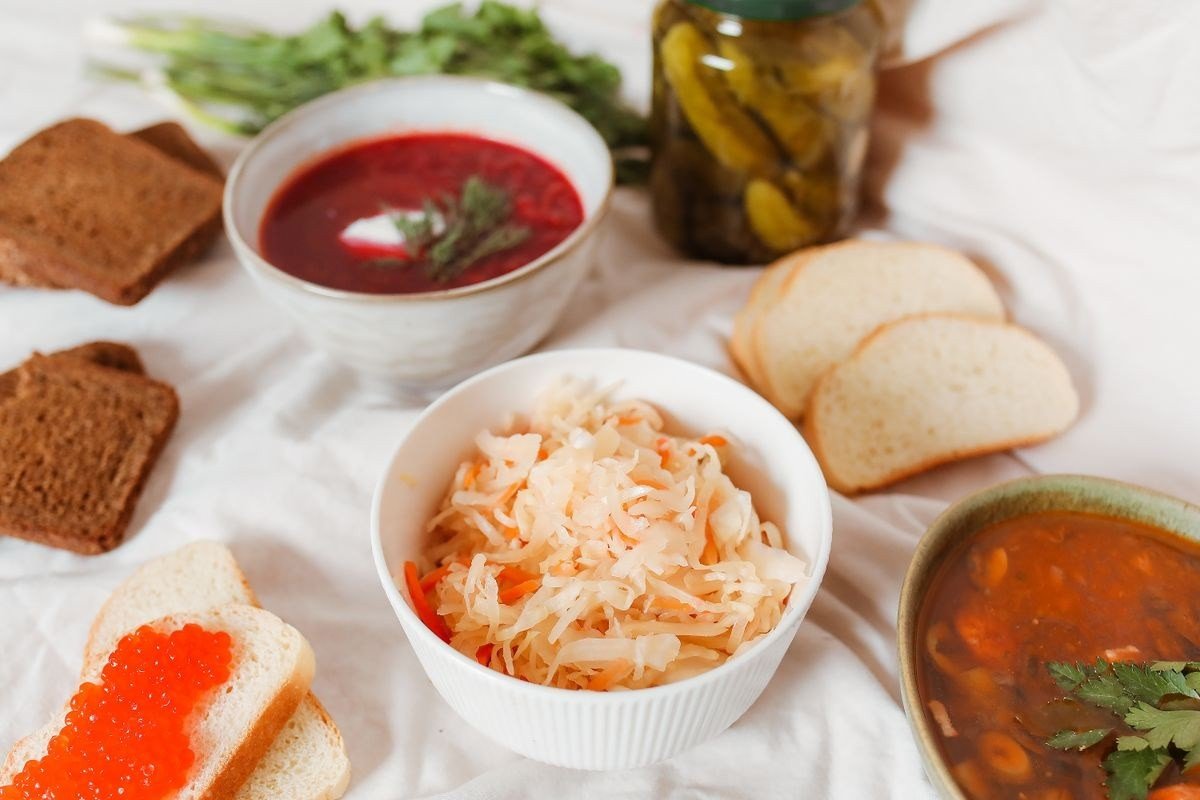
Stir kraut into grain bowls, salads and noodle dishes for a tangy lift, or serve it with cheese and bread as a simple lunch. A little kraut brine also makes an excellent salad dressing base, whisked with oil and mustard. Its uses extend far beyond the traditional plate.
Serve kraut cold or at room temperature to preserve its fresh, tangy character, though it can also be warmed gently in cooked dishes. Start with small amounts if you are new to fermented foods, letting your palate adjust. Kraut’s bright flavour enhances almost any savoury meal. A little kraut brine whisked with oil and mustard makes an excellent dressing base.
Cleaning and Reusing Equipment

After a batch finishes, wash jars, weights and utensils thoroughly with hot, soapy water. Glass jars and weights can be reused indefinitely, making fermentation an economical hobby. Check jars for chips or cracks before reuse, discarding any damaged glass.
Cloth covers should be washed and dried fully between batches. Wooden tampers need thorough washing and air-drying to prevent moisture damage. Clean equipment ensures each new batch starts in the best possible condition.
Keep your fermentation kit together in one place, ready for the next batch. Many enthusiasts start a new jar as soon as one finishes, maintaining a continuous supply. Reusable equipment and simple ingredients make fermented cabbage a sustainable kitchen tradition. Keeping your fermentation kit together means the next batch starts without delay.
Scaling Up and Gifting Kraut
Once confident, scale up by fermenting several jars at once or using a large crock. Keep the two percent salt ratio consistent regardless of batch size, weighing all vegetables together. Multiple jars let you try different flavour variations side by side.
Homemade kraut makes a thoughtful, unusual gift, presented in a pretty jar with a handwritten label. Include the ingredients, the date made and serving suggestions on the label. Recipients appreciate the time and care behind a handmade fermented food.
Start your next batch as soon as the first is refrigerated, building a rhythm of continuous fermentation. With practice, making kraut becomes second nature, a simple seasonal ritual. Enjoy your homemade fermented cabbage, and share it generously with family and friends. With practice, making kraut becomes second nature, a simple seasonal ritual.

I am Talha Sikandar, a professional writer with a passion for general blogging. With years of experience in content writing and research, I founded Meaniingly.com to deliver well-researched, informative, and user-friendly articles on diverse topics.