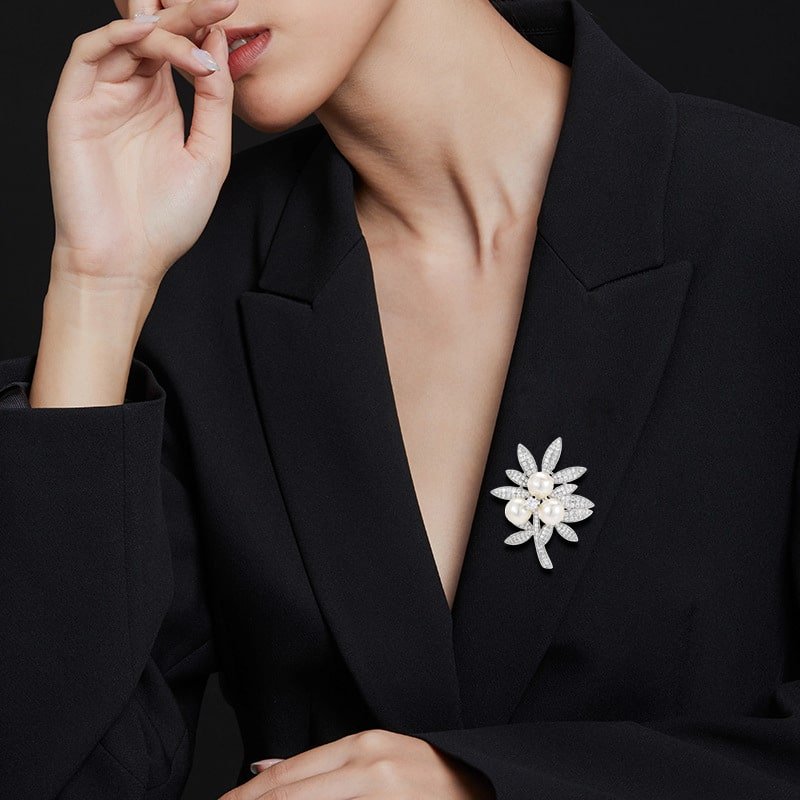
Brooch outfit ideas
Brooches are having an undeniable renaissance. Once dismissed as grandmother jewelry, they’re now pinned to the lapels of fashion editors, red-carpet stars, and street-style photographers alike. The appeal is obvious once you try it: a brooch is the fastest way to personalize an outfit, adding character to everything from a blazer to a beanie in about three seconds. But most people own exactly one brooch (inherited, gifted, or thrifted on impulse) and have no idea what to do with it. This guide covers 22 ways to wear brooches — on lapels, knits, denim, dresses, hats, bags, and beyond — plus how to buy vintage, how to cluster multiples, how to keep them secure, and how to build a collection worth wearing for decades.
Why Brooches Are Back: The Jewelry Trend Nobody Saw Coming
Every jewelry trend cycles, and the brooch’s return was overdue. After a decade of delicate minimalism — tiny necklaces, barely-there studs — fashion swung toward maximalism, and brooches fit perfectly: they’re bold, sculptural, and deeply personal. Unlike most jewelry, brooches aren’t sized to the body, so one piece works for everyone. They carry stories — inherited pieces, travel souvenirs, thrifted treasures — which suits an era that values individuality over logos. Designers have embraced them on runways, styling oversized brooches on coats and clustered vintage pins on tailoring. The practical case is just as strong: a brooch refreshes clothes you already own, making it the most sustainable accessory purchase you can make. One pin, endless outfits.

The Classic Lapel: Brooches on Blazers and Coats
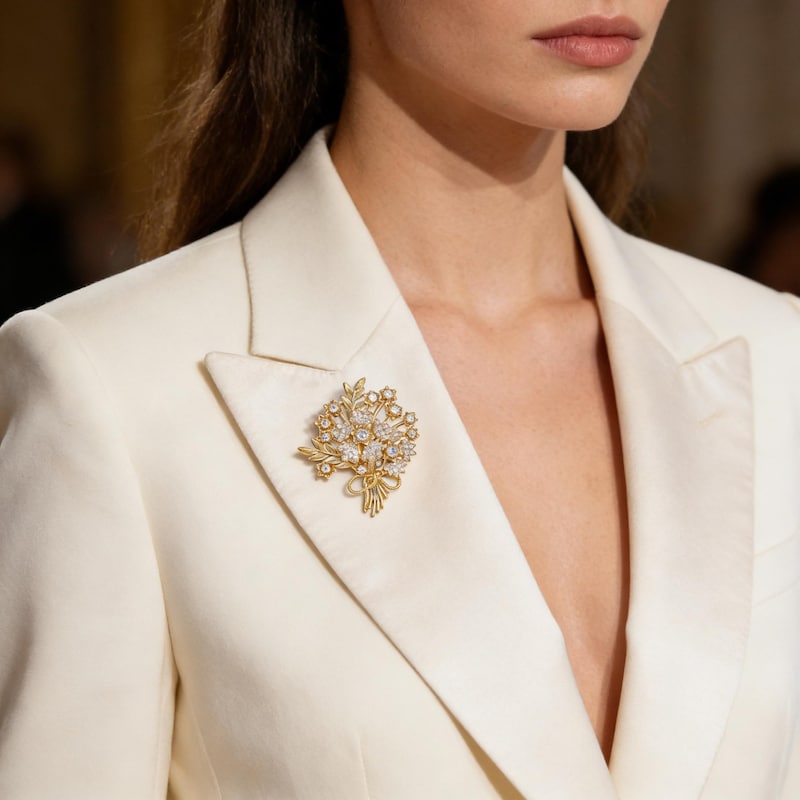
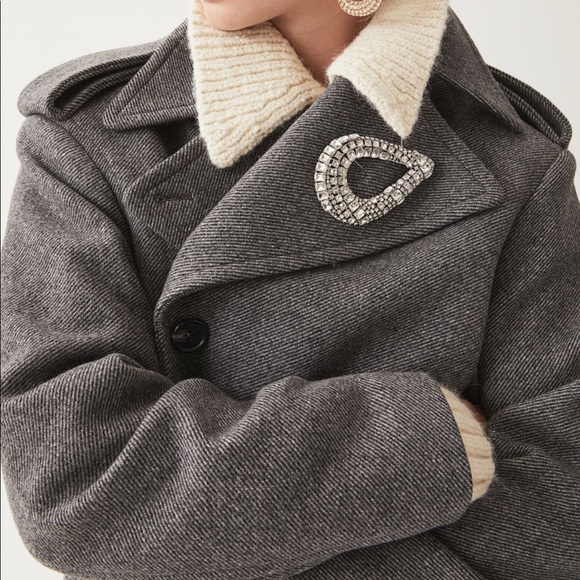
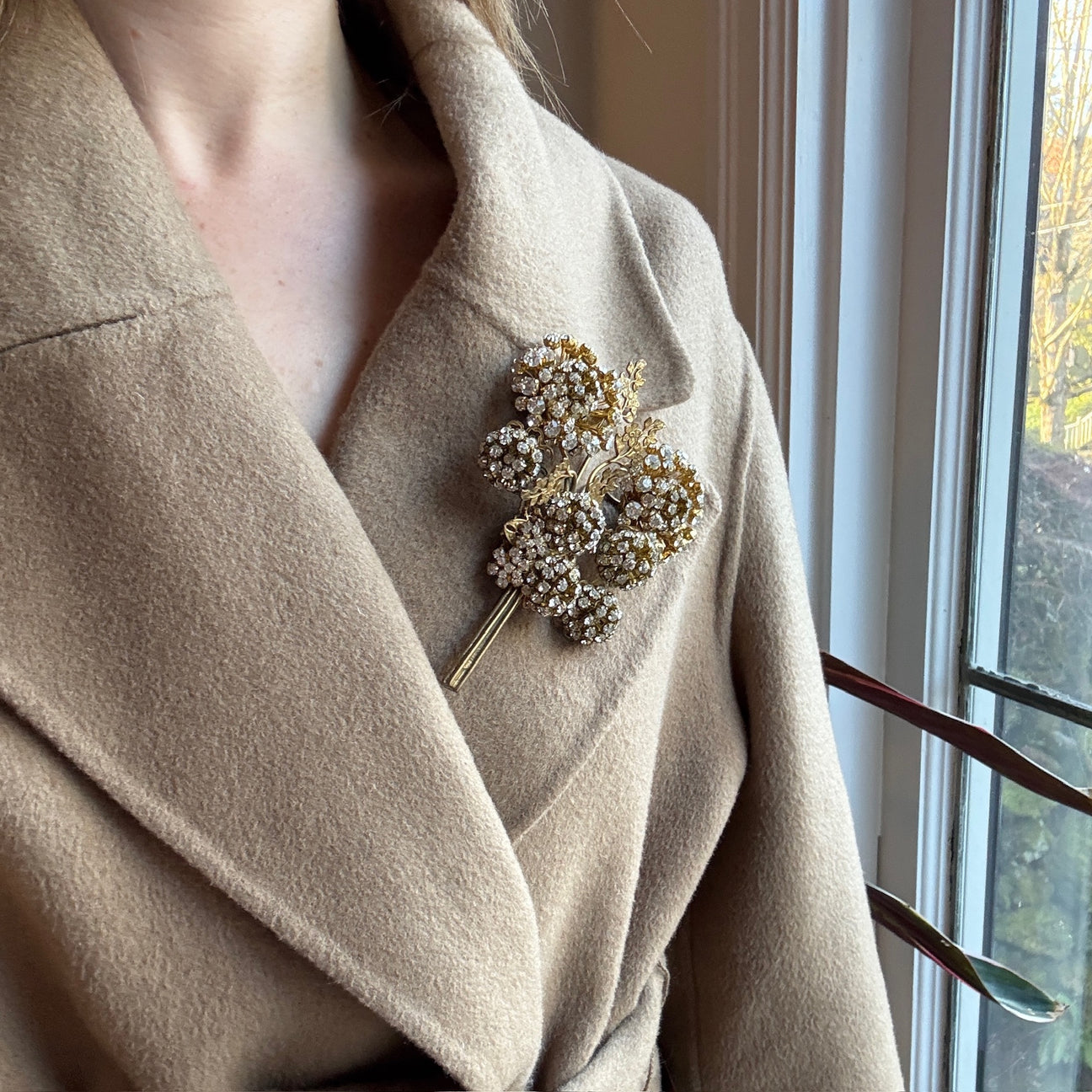
The lapel remains brooch territory number one, and the rules are simple. Pin on the left lapel (the traditional side), positioning the brooch about halfway between the collar and the shoulder seam — high enough to be seen, low enough not to fight the collar. Scale matters: a medium brooch (1 to 2 inches) suits most blazers; oversized statement pieces need the real estate of a coat lapel. On double-breasted blazers, try pinning near the top button instead of the lapel for a modern twist. For coats, one bold brooch on a wool coat collar elevates the entire winter wardrobe — it’s the accessory equivalent of a great lipstick. If your blazer has no lapel (a collarless style), pin the brooch where a lapel would be, or cluster two smaller ones asymmetrically near the shoulder.

Brooches on Knitwear: Sweaters and Cardigans
Knitwear and brooches are a perfect pairing — the soft texture makes pins easy to attach and the combination reads effortlessly chic. On a crewneck sweater, pin the brooch slightly off-center near the collarbone, like a pendant that decided to stay put. Cardigans offer two classic placements: pinned at the throat to hold the top closed (functional and beautiful), or on one side of the chest. Chunky knits handle larger, heavier brooches; fine-gauge knits need lighter pins to avoid sagging. A brooch transforms even the plainest sweater — that gray crewneck you’ve worn a hundred times becomes a deliberate outfit with a vintage crystal pin. For turtlenecks, pin at the side of the neck ribbing or center-front just below the fold; both placements draw the eye upward flatteringly.
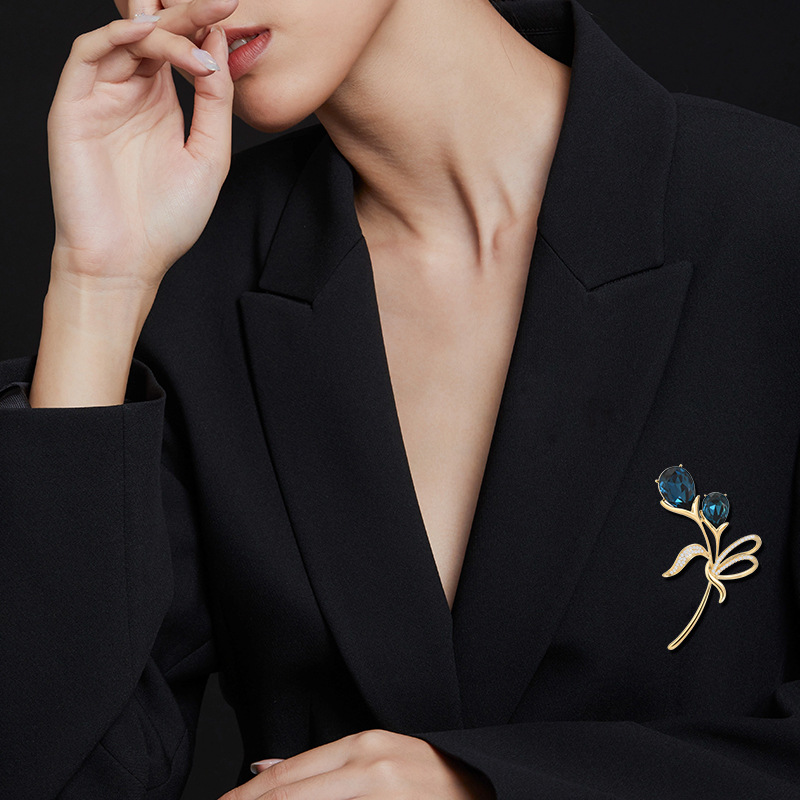
Clustering: Wearing Multiple Brooches at Once
One brooch is classic; three to five is a statement. Clustering — grouping multiple brooches together — is the stylist’s trick for maximum impact. The method: choose brooches with a common thread (all vintage gold, all nature-themed, all the same color family) and arrange them in a loose constellation on a lapel, sweater chest, or denim jacket. Vary sizes with one anchor piece and smaller satellites. Odd numbers look best. Keep the cluster contained within a roughly 4-inch area so it reads as one composition rather than scattered pins. This is the ideal fate for inherited brooches that feel too small or fussy alone — together, they become a curated collection. Start with three; you’ll know when to stop because the arrangement will suddenly look “done.”

Brooches as Scarf and Shawl Fasteners
Before brooches were decoration, they were hardware — and they still excel at holding things together. Use a brooch to fasten a scarf at the shoulder instead of knotting it: drape the scarf, gather the fabric, and pin through both layers. The same trick secures shawls, wraps, and cape-style cardigans that tend to slide off. Choose brooches with strong clasps and locking backs for this job, since they bear weight and movement. A large shawl pin or penannular-style brooch is purpose-built for the task, but any sturdy brooch works. This is both practical and elegant — no more retying scarves all day — and it turns the fastener into a focal point. In cold months, a brooch-fastened wrap becomes your signature look.
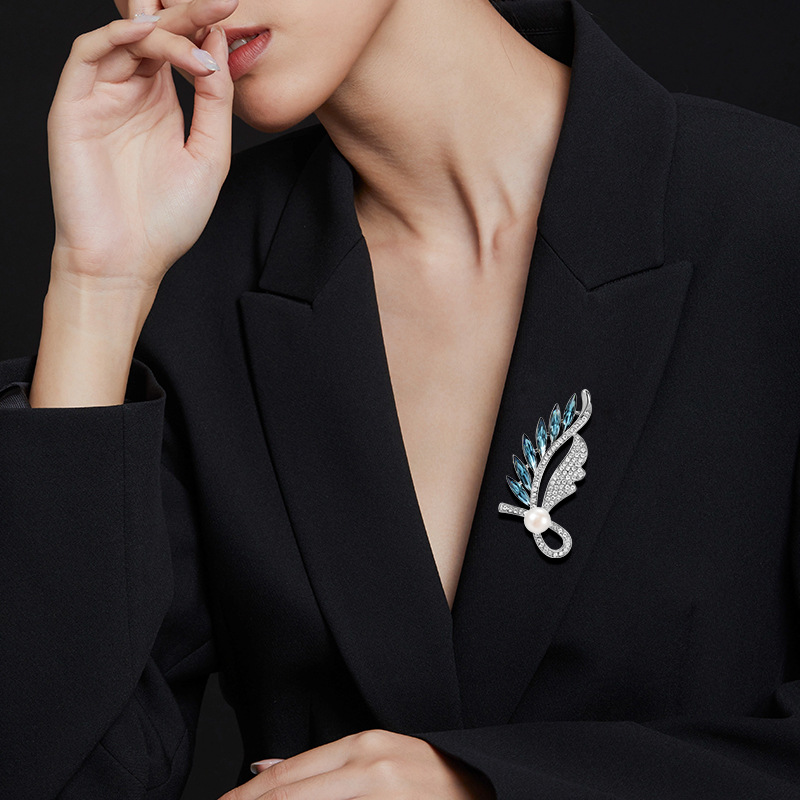
Dressing Up Denim: Brooches on Jackets and Jeans
Denim jackets are the ultimate brooch canvas — sturdy, casual, and practically begging for personalization. Cluster vintage brooches on one lapel, scatter enamel pins and a brooch across the back yoke, or line small brooches down both front plackets. The high-low mix of casual denim and jeweled brooches is exactly what makes the look modern. On jeans, pin a small brooch at the front pocket or use one to cinch a too-loose waistband at the back (hidden under a top, it’s a perfect fit hack). Denim’s weight handles even heavy brooches without sagging. This is also the best way to wear novelty and kitsch brooches — on denim they read playful and cool; on a blazer the same pin might read costume. Let the denim do the casualizing.

Brooches on Dresses: Necklines, Waists, and Shoulders
Dresses offer brooches three prime locations. At the neckline: pin where a necklace pendant would sit on a plain dress — it functions as a permanent necklace that never tangles. At the waist: a brooch at the side of the waist defines shape and adds sparkle exactly where a belt would, without the bulk; it works beautifully on wrap dresses and fit-and-flare styles. At the shoulder: an asymmetric shoulder pin on a one-shoulder dress or an off-center placement on a boat neckline adds red-carpet drama. For strapless or spaghetti-strap dresses, a brooch at the center bust acts as the jewelry for the whole outfit. Match the brooch’s formality to the dress — crystal and pearl for evening, enamel and vintage gold for day.
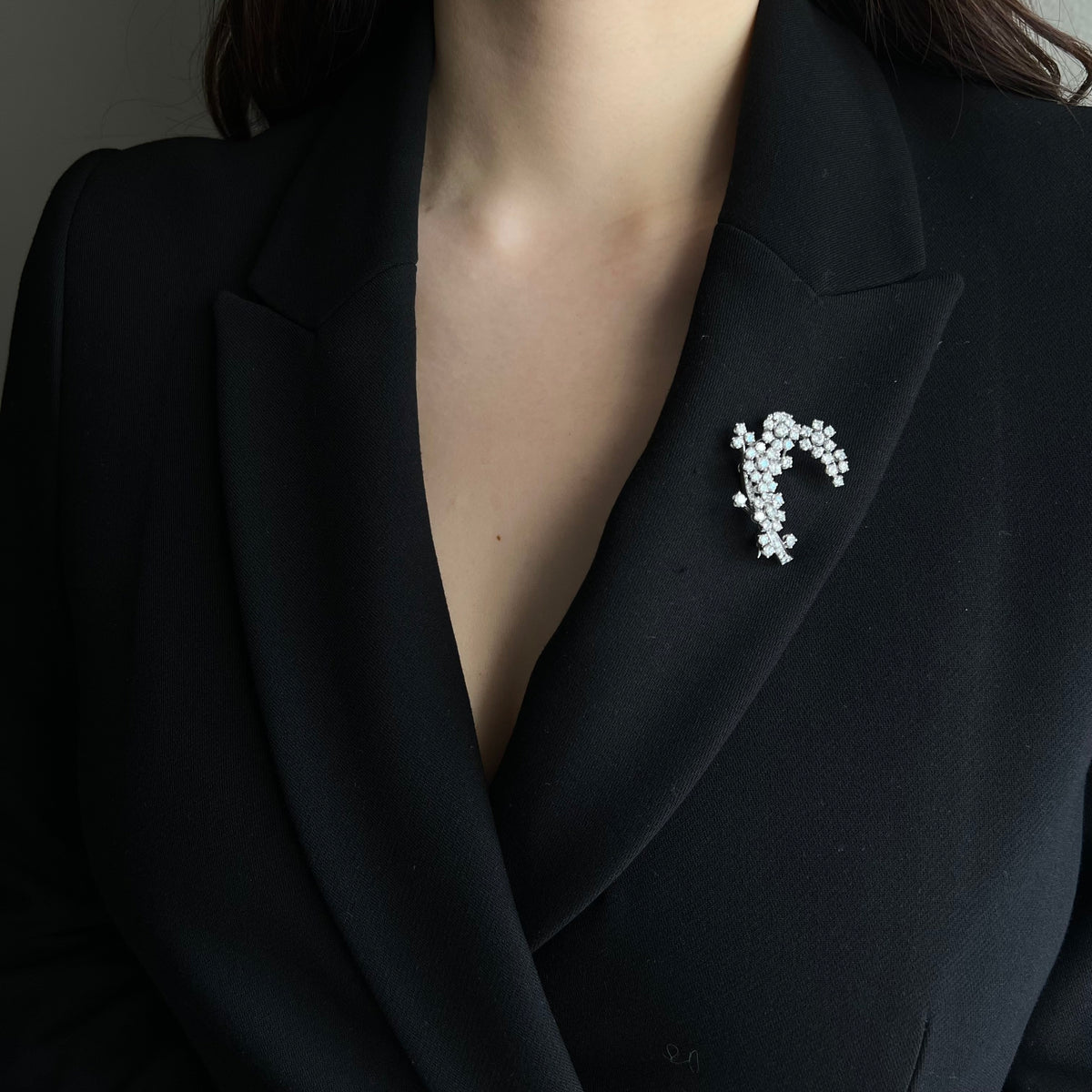
Vintage Brooches: What to Look For When Thrifting
Thrift stores and estate sales are brooch treasure troves, but a trained eye finds the gems. Check the back first: quality vintage brooches have secure clasps (trombone clasps on older pieces, locking C-clasps on mid-century), clean soldering, and often a maker’s mark. Weight suggests quality — pot metal feels light and hollow; brass, sterling, and glass have heft. Look for hand-set stones (slight irregularities are good), enameling without chips, and pearls with a deep lustrous glow rather than a plastic shine. Test the clasp mechanism; a brooch that won’t stay closed is unwearable. Don’t dismiss tarnished silver or dull gold — they clean up beautifully. Prices are usually $3 to $15, making vintage brooches one of thrifting’s great bargains. Buy what delights you; wearability beats collectibility for a working collection.
Brooches on Hats, Berets, and Beanies
A brooch on a hat is the kind of detail that makes strangers ask where you shop. On berets, pin the brooch at the side, just above the band — the classic French placement. Wide-brim hats take a brooch on the band or at the side where the crown meets the brim. Beanies and knit caps get an instant upgrade from a small sparkly brooch pinned off-center near the fold. Even baseball caps work with an enamel brooch on the front panel for a playful twist. Keep hat brooches lightweight so they don’t drag the fabric, and use the pin’s own clasp plus a small piece of felt behind thin fabrics to prevent tearing. This trick is especially useful in winter, when hats are daily wear and a brooch keeps them feeling like a choice rather than a necessity.

Turning Brooches Into Hair Accessories
Brooches make spectacular hair accessories with zero modification. Pin one to a fabric headband, slide it onto a bobby pin pushed through the clasp for a hairpin, or attach it to a plain ponytail holder by pinning through the elastic’s fabric covering. For updos, pin a brooch directly into the hair at the side of a bun or chignon — the pin back grips hair surprisingly well, though a couple of bobby pins for backup don’t hurt. Small brooches become earrings-adjacent accents clipped near the temple in half-up styles. This is a brilliant use for brooches that feel too fussy for clothing — in hair, even the most ornate vintage piece reads romantic and modern. Test the weight first; if it pulls, save it for clothing and choose a lighter pin for hair.

Brooches on Bags and Totes
Your handbag is a legitimate brooch venue. Pin one (or a cluster) on a canvas tote to personalize an everyday carrier, on a leather bag’s front pocket for polish, or on a clutch for evening — a crystal brooch on a plain black clutch reads like expensive hardware. Backpacks get personality from enamel brooches on the front pocket. The considerations are practical: use locking backs so pins don’t work loose with movement, avoid placing brooches where they’ll snag on clothing, and skip heavy brooches on delicate fabrics. One underused trick: pin a brooch to a bag’s strap near the shoulder — it’s visible, secure, and unexpected. Bags take more abuse than clothing, so reserve your sturdiest, least precious brooches for bag duty.

The Shirt Collar: Brooches on Button-Downs
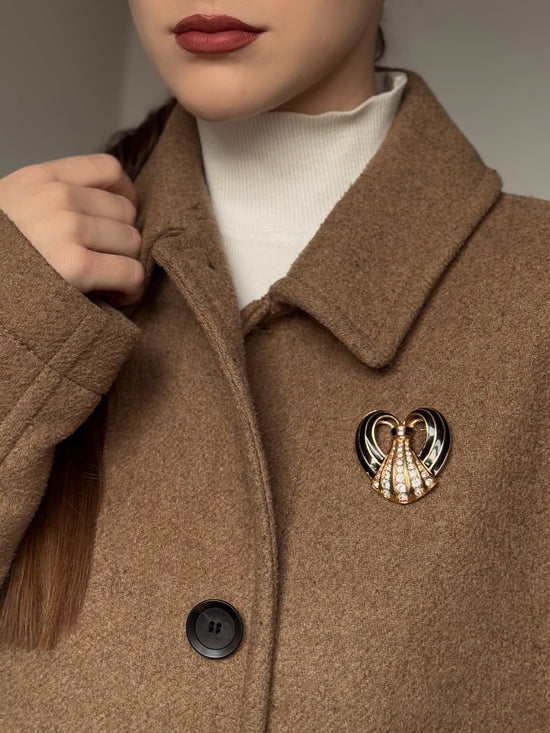
A brooch on a button-down shirt collar is preppy-meets-personal in the best way. Pin a small brooch at the collar point, replacing or complementing a collar pin — it works on oxford shirts, denim shirts, and silk blouses alike. For a bolder look, pin matching small brooches on both collar points. Another classic: fasten the collar closed with a brooch instead of the top button, letting the neckline drape slightly for a relaxed elegance. Under a sweater, let just the brooched collar peek out — the hint of sparkle at the neck is incredibly chic. Keep shirt brooches small and light; heavy pins pull collars out of shape. This styling works beautifully in professional settings where a brooch reads polished and intentional.

Brooches for Evening: Gowns and Cocktail Dresses
Evening is the brooch’s natural habitat. A crystal or pearl brooch on a gown’s shoulder, waist, or neckline adds jewelry exactly where you want it without competing with earrings or bracelets. For strapless gowns, a brooch at the center or side of the bodice becomes the necklace. On cocktail dresses, try the unexpected: a brooch at the back neckline (stunning when you turn around), clustered at one hip, or holding a draped sash. Match metals to your other jewelry for cohesion, or deliberately contrast — a vintage gold brooch with silver jewelry looks collected and confident. Evening brooches can be bigger and sparklier than day pieces; this is the moment for the dramatic heirloom pin. Just ensure the clasp is secure — re-pin and test before you leave.
Mixing Metals and Styles Without Clashing
The old rule against mixing metals is dead, but mixing still requires intention. The key is distribution: if you wear a gold brooch with silver earrings, repeat each metal at least twice (gold brooch + gold ring, silver earrings + silver bracelet) so nothing looks accidental. Mixed-metal brooches themselves make this effortless. When clustering different-style brooches, unite them with one common element — same era, same color stone, same motif family. Contrast is fine and even desirable: a sleek modern brooch beside a fussy Victorian one tells an interesting story. What to avoid: pieces that fight for attention at the same visual weight in clashing styles. When in doubt, step back from the mirror — if your eye bounces anxiously between pieces, simplify; if it flows, you’ve nailed it.

Brooches on Menswear-Inspired Looks
Brooches aren’t gendered, and menswear-inspired styling shows them at their sharpest. On a suit lapel, a brooch replaces the boutonniere with something permanent and personal — choose architectural, nature-inspired, or abstract designs over anything too delicate. Waistcoats and vests take brooches beautifully at the chest pocket or center front. A brooch on a tie — pinned through the knot or as a tie bar alternative — is a power move. On overcoats, go bold: a large sculptural brooch on heavy wool reads confident and artistic. The styling principle is contrast: the structure of tailoring makes even an ornate brooch look deliberate. More men are wearing brooches every year, and the look transcends gender entirely — it’s about the tailoring, not who’s wearing it.

Securing Brooches: Keeping Them Safe and Damage-Free
A brooch only works if it stays put and doesn’t ruin your clothes. For security, upgrade to locking pin backs on valuable pieces — they screw or lock closed and won’t pop open. On heavy brooches, add a second pin back or a small safety pin behind the fabric for backup. To prevent fabric damage: never pin through delicate silk or fine knits without a backing — place a small piece of felt or a button behind the fabric to distribute the pin’s pressure. Pin through seams or doubled fabric (lapel edges, collar folds, waistbands) whenever possible; they’re sturdier and hide holes. Remove brooches before washing or dry cleaning, and store each in its own pouch so clasps don’t scratch stones. A well-secured brooch survives decades of wear; a careless one lasts one outing.
Brooch Placement Rules (and When to Break Them)
Traditional placement rules exist for good reason — they flatter — but knowing them lets you break them well. The classics: left lapel, off-center on knitwear near the collarbone, at the waist’s side seam on dresses. These placements work because they sit at natural focal points and move with the body gracefully. Break the rules when you want attention: centered on the chest, at the hip, on the back of a dress, or marching down a sleeve. Asymmetry is your friend — off-center placements look modern while dead-center can look static (evening gowns excepted). Consider your body in motion: brooches near the face draw eyes up; waist placements emphasize the midsection. There are no brooch police, but there is the mirror test — if the placement makes you stand taller, it’s right.

Caring for Vintage and Costume Brooches
Brooches last generations with basic care. Store each piece separately in a soft pouch or lined box compartment — stones scratch each other and clasps tangle. Keep them dry: moisture dulls finishes and loosens glued stones, so remove brooches before rain, workouts, and perfume application (spray perfume first, pin after it dries). Clean gently: a soft dry cloth for most pieces; a barely-damp cloth for sturdy metal; never submerge. For silver, use a silver polishing cloth rather than liquid dips, which can damage stones and patina. Check clasps and stone settings annually — a jeweler can tighten prongs cheaply, saving you from losing a stone. Costume jewelry with glued stones needs extra gentleness; heat and water are its enemies. Treat vintage pieces with respect and they’ll outlive trends by decades.

Where to Buy Beautiful Brooches
Building a brooch wardrobe is a treasure hunt with many good hunting grounds. Thrift stores and estate sales offer the best prices on vintage — $3 to $15 for pieces that would cost $50+ elsewhere. Antique shops and vintage jewelry dealers cost more but offer authenticated, higher-end pieces with knowledgeable sellers. Online marketplaces let you search specifically (“Art Deco brooch,” “crown Trifari pin”) and compare prices, but inspect photos closely for damage and confirm clasp function with sellers. Independent jewelry artists create stunning contemporary brooches — sculptural, enameled, unexpected — often at fair prices. Museum gift shops are sleeper hits for art-inspired enamel brooches. And don’t overlook your own family: ask relatives about brooches sitting unworn in drawers. The best brooch is often the one with a story, and family pieces come with the best stories of all.

Building a Brooch Collection Over Time
A great brooch collection isn’t bought in a day — it’s assembled piece by piece, each with a memory attached. Start with one versatile workhorse: a medium vintage gold or crystal brooch that works on blazers, sweaters, and coats. Add a fun novelty piece that makes you smile, then a pearl or enamel brooch for dressier occasions. From there, let the collection grow organically: a souvenir brooch from each trip, an estate-sale find each season, a birthday gift to yourself annually. Aim for variety in size, color, and formality so you always have the right pin. Display them where you’ll see them — a velvet-lined tray or framed pin board — because brooches you forget are brooches you never wear. In ten years, you’ll have a collection that’s part jewelry box, part autobiography.
Brooches prove that the smallest accessory can make the biggest difference. Start with a single pin on a blazer lapel or sweater, and notice how it changes not just the outfit but how you carry yourself — there’s a reason brooches have signaled confidence for centuries. Experiment with clustering, try unexpected placements, rescue vintage beauties from thrift stores, and let your collection grow one meaningful piece at a time. In a world of fast fashion and disposable trends, the brooch is refreshingly permanent: a tiny, shining declaration that style is personal, deliberate, and entirely your own.

I am Talha Sikandar, a professional writer with a passion for general blogging. With years of experience in content writing and research, I founded Meaniingly.com to deliver well-researched, informative, and user-friendly articles on diverse topics.