halloween sensory bin ideas
A Halloween sensory bin is a container filled with themed materials — dried beans, water beads, shredded paper, mini pumpkins — that kids dig into, scoop, pour, and explore with their hands. It’s part activity, part decoration, and entirely magical for little ones. Sensory bins build fine motor skills, encourage independent play, and give kids a safe way to engage with Halloween’s spooky themes on their own terms. They’re also a lifesaver for parents: fifteen minutes of setup buys you a solid stretch of absorbed, happy play. Whether you’re hosting a Halloween party, looking for October afternoon activities, or need a calm-down corner during the sugar-fueled excitement of the season, these twenty Halloween sensory bin ideas will keep little hands busy and imaginations sparking all month long.

1. What Is a Halloween Sensory Bin
A sensory bin is simply a shallow container filled with materials chosen to engage the sense of touch — and a Halloween sensory bin themes those materials around the holiday. The classic formula has three parts: a base filler (the main tactile material), themed trinkets (mini pumpkins, plastic spiders, skeleton figures), and tools (scoops, tongs, cups). Kids explore by digging, pouring, scooping, sorting, and pretending — there’s no right way to play, which is exactly the point. Bins can be as simple as a baking dish of dried black beans with hidden treasures, or as elaborate as a multi-layer “witch’s potion” station. The Halloween theme is ideal because the holiday is already rich with textures and imagery: bumpy pumpkins, stretchy slime, crunchy leaves, smooth “eyeballs.” It’s open-ended play at its best.

2. Why Sensory Bins Are Great for Kids
Sensory play isn’t just fun — it’s developmental rocket fuel. Scooping, pouring, and picking up small objects builds the fine motor skills kids need for writing, buttoning, and countless daily tasks. Sorting objects by color or type practices early math concepts. The open-ended nature of bin play encourages creativity, storytelling, and problem-solving as kids invent scenarios with their materials. For many children, the repetitive motions of sensory play are genuinely calming — the tactile input helps regulate emotions, which is why bins work so well as calm-down tools during overstimulating holidays. Sensory bins also support language development as kids describe textures and narrate their play. And perhaps most practically, they foster independent play: a well-stocked bin holds a child’s attention far longer than most toys, giving caregivers a precious window of time.
3. Safety First: Age Guidelines
Before you build any sensory bin, match the materials to the child’s age — this is the most important section in this guide. For babies and toddlers under three who still mouth everything, use only large, taste-safe fillers: cooked spaghetti dyed orange, large pumpkin pieces, or water with floating toys. Avoid small objects entirely — no dried beans, beads, buttons, or anything that fits through a toilet paper tube. For ages three and up, small fillers like dried beans, rice, and water beads are generally fine with supervision, but always stay nearby. Check all trinkets for sharp edges and breakable parts. If using scented materials, ensure they’re non-toxic and well-ventilated. And regardless of age, establish one rule from the start: bin materials stay in the bin. A shower curtain or tablecloth underneath catches inevitable spills and makes cleanup painless.
4. The Classic Orange-and-Black Bin
Start with the quintessential Halloween color scheme: a bin that screams October. Fill a shallow container with dried black beans as the base — they’re inexpensive, satisfying to scoop, and the dark color makes hidden treasures pop. Add orange elements: mini craft pumpkins, orange pom-poms, orange dyed rice in a corner, plastic jack-o’-lantern figures. Tuck in black trinkets too: plastic spiders, bats, and skeleton pieces. Include scoops, small cups, and tongs for transferring. This bin is endlessly adaptable: hide plastic “treasures” for kids to find, add letter cards for a literacy twist, or include counting cards for math practice. The high-contrast colors are visually stimulating for younger kids, and the bean base stores beautifully in a zip bag for reuse all season. It’s the little black dress of Halloween sensory bins — simple, classic, always right.
5. Pumpkin Patch Sensory Bin
Bring the pumpkin patch indoors with a bin that celebrates the season’s star. Use orange-dyed rice or shredded paper as “soil,” then nestle in mini pumpkins and gourds of various sizes — real ones for authentic texture, craft ones for longevity. Add silk fall leaves, cinnamon sticks (wonderful scent!), and small hay bales from the craft store. Include a toy tractor or wheelbarrow for harvesting play, plus baskets for collecting the mini pumpkins. Kids love the pretend-play narrative: planting, growing, harvesting, and selling their pumpkin crop. For an educational layer, add pumpkin life-cycle cards or counting activities. The cinnamon sticks make this bin smell like fall itself. When October ends, the real mini pumpkins can go to compost and the rest stores away — though you may find kids requesting the pumpkin patch bin well into November.

6. Witch’s Potion Sensory Bin
Every little witch needs a potion station. Fill a bin with water tinted with a few drops of food coloring (purple and green are potion-perfect), then add “ingredients”: pom-poms, plastic eyeballs, dried flowers, glitter, and sliced pool noodles as “ingredients” to chop. Provide ladles, test tubes or small jars, and a cauldron (a black plastic one from the party store is ideal) for mixing. Kids concoct potions, name them (“Witch’s Brew,” “Monster Slime”), and pour them between containers endlessly. Add a drop of dish soap for bubbles, or freeze the water with trinkets inside for an icy excavation twist. This bin is gloriously messy — set it up outside or on a waterproof mat. The imaginative play is off the charts: you’ll hear spell-casting, ingredient negotiations, and very serious potion quality control. It’s Halloween magic in its purest form.

7. Spooky Spider Web Bin
Stretch white yarn or string across the top of a bin in a web pattern (tape the ends to the rim), then fill the base with black beans or shredded black paper. Hide plastic spiders throughout — some in the web, some buried in the base for discovery. Add tweezers or tongs for “rescuing” the spiders, which builds fine motor skills and hand strength. For brave little ones, include magnifying glasses for spider examination. You can extend the learning by adding a simple spider fact card or counting the spiders’ legs. The contrast of white web against dark base is visually striking, and the treasure-hunt element keeps kids engaged. For toddlers, use large spider toys and skip the small beans in favor of shredded paper. This bin is proof that spooky can be completely delightful — most kids end up naming their spiders and giving them elaborate backstories.

8. Monster Mash Color Bin
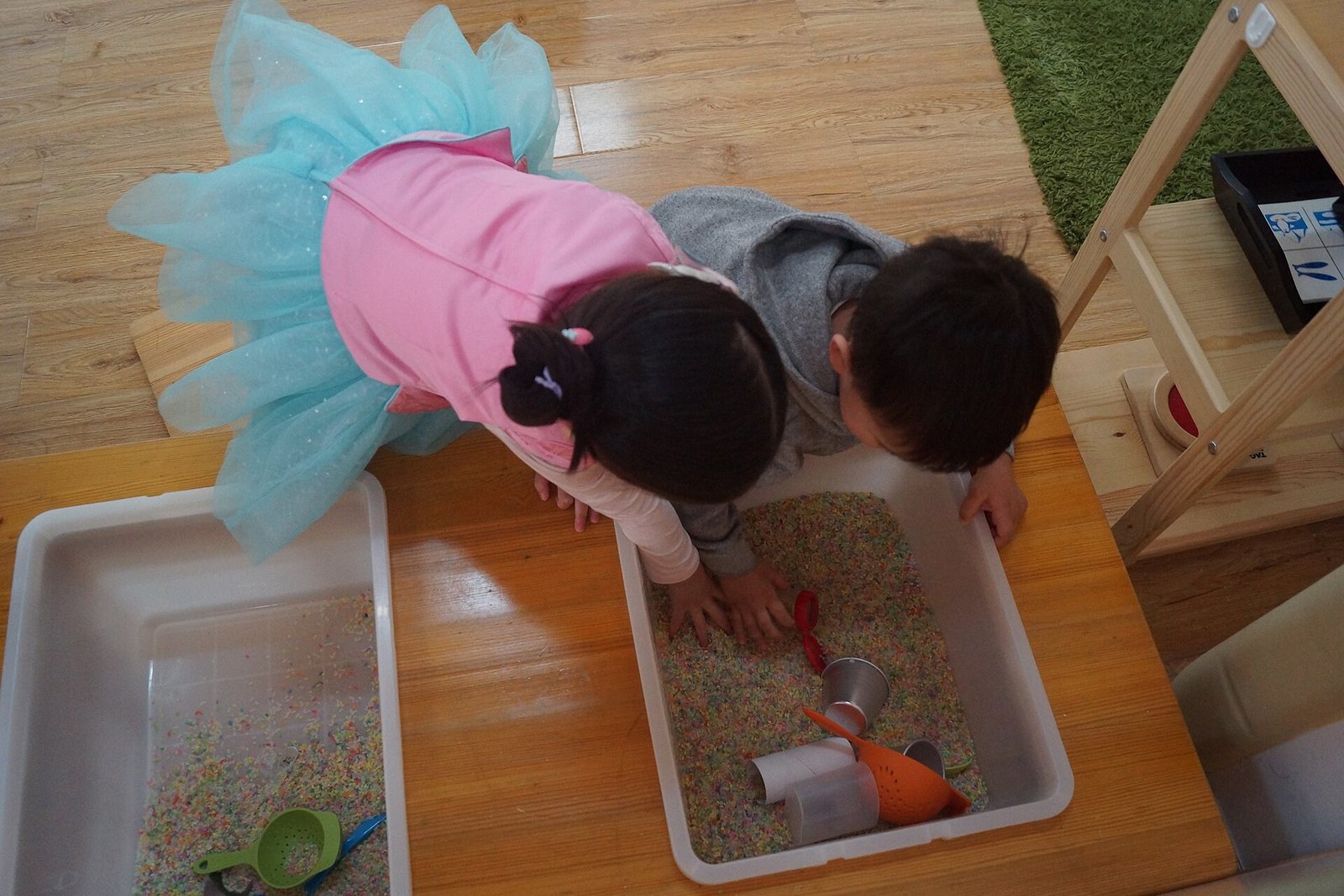
Lean into bright, silly monster fun with a color-explosion bin. Fill sections of a large bin (or several small bins) with different colored fillers: green dyed rice, purple water beads, orange shredded paper, black beans. Add googly eyes in every size — the essential monster ingredient — plus pom-poms, pipe cleaners, and playdough for building actual monsters. Kids create creatures, give them names, and act out monster stories. This bin is fantastic for color sorting and counting practice: “Can you find five green googly eyes?” For a party, set it up as a monster-making station where each child builds a monster to take home in a small cup. The open-ended creativity here is wonderful — there’s no wrong way to build a monster, which makes this bin perfect for kids who like to do things their own way.
9. Fall Harvest Sensory Bin
Not every October bin needs to be spooky — a harvest theme celebrates the season’s gentler side. Fill a bin with dried corn kernels (a classic sensory filler with a wonderful sound and feel), then add mini gourds, silk leaves, cinnamon sticks, dried apple slices, and small pinecones. Include scoops and baskets for harvesting play, plus a toy truck for transporting the “crop.” The natural materials offer rich sensory variety: smooth kernels, rough pinecones, fragrant cinnamon, papery leaves. This bin smells like fall and looks beautiful enough to leave out as decor. Add pumpkin life-cycle sequencing cards or leaf identification cards for an educational layer. It’s a lovely option for classrooms, for families who prefer low-spook Halloween celebrations, or as a calm counterpoint to spookier bins. The corn kernel base stores well and can be reused for Thanksgiving play too.
10. Glow-in-the-Dark Sensory Bin
Take sensory play into the dark with a glow bin that’s pure Halloween magic. Fill a bin with water beads that glow (or add glow-in-the-dark paint to regular fillers), then add glow bracelets, glow-in-the-dark stars, and LED tea lights. Play in a dimmed room or under a blanket fort for maximum effect. Kids are mesmerized — the familiar act of scooping becomes otherworldly when everything glows. Add black light-reactive materials (neon pom-poms, white objects) and a black light flashlight for an extra wow factor. This bin is spectacular for a Halloween party’s quiet corner or as a special evening activity. Safety note: ensure all glow items are large enough for the child’s age and non-toxic; crack-and-shake glow sticks should be used with supervision since the inner liquid isn’t for mouthing. The memory of glowing sensory play lasts long after October.
11. Edible Halloween Sensory Bins
For the youngest players who still taste everything, edible bins are the worry-free answer. Cooked spaghetti dyed orange and black with food coloring makes wonderfully slimy “witches’ hair” — toss with a little oil to prevent sticking. Cooked oatmeal dyed green becomes “monster mush.” Crushed graham crackers or cookie crumbs make taste-safe “dirt” for burying large toys. Mashed sweet potato, dyed yogurt, and applesauce tinted with food coloring all work as colorful, completely safe fillers. Add large, washable Halloween toys — no small parts. The beauty of edible bins is total peace of mind: every handful that goes in the mouth is just food. They’re messier than dry bins, so strip little ones down to diapers or smocks and set up on an easy-clean surface. When play is done, the whole bin can go straight to compost — zero waste, zero worry.
12. Scented Sensory Bin Ideas
Engage the nose as well as the hands with scented Halloween bins. Cinnamon sticks, whole cloves, and star anise in a harvest bin smell like fall baking. A few drops of pumpkin spice essential oil (child-safe, well-diluted) on dried rice creates an irresistible aroma. Dried orange peels and apple slices add natural fragrance to any bin. For spooky scents, try a “potion” bin with peppermint extract (smells like magic) or vanilla. Always use food-grade or child-safe scents, keep concentrations low, and ensure good ventilation — little noses are sensitive. Avoid strong synthetic fragrances and anything that could irritate skin or eyes. Scent adds a whole new dimension to sensory play and creates powerful memory associations; years later, the smell of cinnamon will still remind your child of Halloween bin play. Just remember that scented fillers shouldn’t be stored with unscented ones, or everything ends up smelling like pumpkin spice.

13. Tools and Scoops to Include
The right tools transform a bin from a pile of stuff into a proper activity. Essentials: scoops in various sizes (measuring cups work perfectly), tongs and tweezers for fine motor practice, small bowls and cups for sorting and pouring, and funnels for extra pouring fun. Halloween-themed tools are delightful: mini cauldrons, pumpkin-shaped buckets, and skeleton-hand scoops from the party store. Different tools build different skills — tongs develop hand strength, pouring hones coordination, sorting builds cognitive skills. Rotate tools between sessions to keep the bin feeling fresh without changing the filler. For toddlers, stick to large, easy-grip scoops; older kids can handle chopsticks or strawberry hullers for a real challenge. Include at least one tool per child if multiple kids play together — tool scarcity causes more bin conflicts than anything else. Good tools are worth investing in; they last for years across countless bins.

14. Sensory Bins for Toddlers
Toddlers (ages 1 to 3) need bins designed for their developmental stage: big materials, simple concepts, and constant supervision. Best fillers: water, cooked pasta, large pom-poms, shredded paper, and soft fabric scraps — all too large to choke on. Keep the trinkets big and simple: large plastic pumpkins, soft spiders, chunky Halloween figures. Tools should be easy-grip: large scoops, cups, and their own hands (toddlers learn most by direct touch). Keep sessions short — 10 to 15 minutes is plenty — and follow the child’s lead rather than directing play. Expect mess; it’s part of the learning. The goal at this age isn’t themed perfection but sensory exploration: feeling textures, practicing pouring, and experiencing cause and effect. One well-chosen filler with a few trinkets beats an elaborate setup that overwhelms. And always, always supervise — toddlers are fast, curious, and committed to tasting everything.
15. Sensory Bins for Preschoolers
Preschoolers (ages 3 to 5) are ready for more complex bins with learning woven in. Add letters to find and name, numbers to count, colors to sort — the bin becomes a stealth classroom. Small fillers like dried beans, rice, and water beads are now appropriate with supervision. Introduce simple challenges: “Can you find all five pumpkins?” or “Sort the spiders by size.” Preschoolers love narrative play, so bins with story potential (the witch’s potion, the pumpkin patch harvest) hold their attention longest. They can handle more tools and enjoy the mastery of tongs and tweezers. This is also the age for collaborative bin play — set up one large bin for two or three children and watch the social skills develop: sharing tools, negotiating roles, building stories together. Extend the learning by pairing the bin with a related book about Halloween or fall. The bin is the hook; the learning follows naturally.

16. Calm-Down Halloween Bins
Halloween excitement can overwhelm sensitive kids — a calm-down bin offers a soothing retreat. Use calming fillers: slow-moving kinetic sand, smooth water beads, or dried lavender buds (lovely scent, gentle texture). Keep colors muted: soft purples, gentle oranges, creams — not the high-contrast black and orange of party bins. Add comforting tools: soft brushes, smooth stones, a small stuffed bat or plush pumpkin to hold. Include a glitter calm-down jar alongside the bin for visual soothing. Place the bin in a quiet corner with a cushion, away from party noise, and introduce it before it’s needed — not mid-meltdown. Teach kids that this is their special spot to reset. The same bin works year-round with seasonal filler swaps, making it a lasting emotional-regulation tool. Every Halloween party with young kids benefits from a calm corner; this bin is its centerpiece.
17. Easy Cleanup Tips
Sensory bins are worth it, but only if cleanup doesn’t ruin the fun. Prevention is everything: set the bin on a shower curtain, tablecloth, or fitted sheet (the elastic corners contain spills brilliantly). Establish the “materials stay in the bin” rule from day one and enforce it gently but consistently. Keep a small hand vacuum or dustpan nearby for quick mid-play touch-ups. For water and wet bins, towels underneath and smocks on kids are non-negotiable. When play ends, use large scoops or cups to return filler to storage — let kids help; cleanup is part of the activity and builds responsibility. A lint roller picks up stray glitter and small bits from floors. For truly tiny spills in carpet, a damp cloth usually suffices for dry fillers. Accept that some mess is the price of rich sensory play — and that it’s always worth it.
18. Storing and Reusing Fillers
Good fillers last for years with proper storage — there’s no need to rebuy every October. Dry fillers (beans, rice, corn kernels, shredded paper) store perfectly in zip-top bags or airtight containers in a cool, dry place; add a bay leaf to deter pantry pests. Label everything with the filler type and date. Water beads should be stored dry (dehydrated) and rehydrated for each use — they last indefinitely this way. Inspect fillers before reuse: discard anything musty, discolored, or infested. Wet fillers (dyed pasta, playdough) are single-season; dry fillers are multi-year. Keep a dedicated “sensory bin” storage box with fillers, tools, and trinkets organized together — when everything lives in one place, setting up the next bin takes minutes. Reusing fillers isn’t just economical; it’s sustainable, and kids love recognizing “their” materials in new themed bins.
19. Sensory Bins on a Budget
Sensory bins are one of the cheapest activities in parenting — most cost under $5. The dollar store is your headquarters: plastic bins, scoops, Halloween trinkets, and seasonal decorations for next to nothing. Dried beans, rice, and lentils from the grocery store cost pennies per bin. Nature provides free fillers: fallen leaves, pinecones, acorns, and smooth stones. Repurpose household items: measuring cups as scoops, muffin tins as sorting trays, ice cube trays for tiny treasures. Craft store coupons make specialty items (water beads, kinetic sand) affordable. Buy Halloween trinkets on November 1st clearance for next year — 70 to 90 percent off. One bag of black beans and a handful of dollar-store spiders is a complete bin. The magic of sensory play has nothing to do with spending; it’s about texture, imagination, and time. The cheapest bin is often the most loved.
20. Extending Play: Prompts and Printables
When the initial excitement fades, prompts and printables breathe new life into a bin. Add challenge cards: “Find 3 orange things,” “Build a spider with 8 legs,” “Hide the pumpkin where no one can find it.” Printable scavenger hunts matched to your bin’s trinkets turn free play into a game. Pair the bin with a Halloween book — read the story, then act it out in the bin. For older kids, add a simple journal prompt: draw your favorite bin creation or write a potion recipe. Rotate trinkets rather than fillers: the same bean base feels brand new with different hidden treasures. Set a timer challenge: “How many spiders can you rescue in one minute?” These extensions stretch a single bin across many play sessions, maximizing your setup effort. The bin is the stage; prompts are the script that keeps the show running.

I am Talha Sikandar, a professional writer with a passion for general blogging. With years of experience in content writing and research, I founded Meaniingly.com to deliver well-researched, informative, and user-friendly articles on diverse topics.