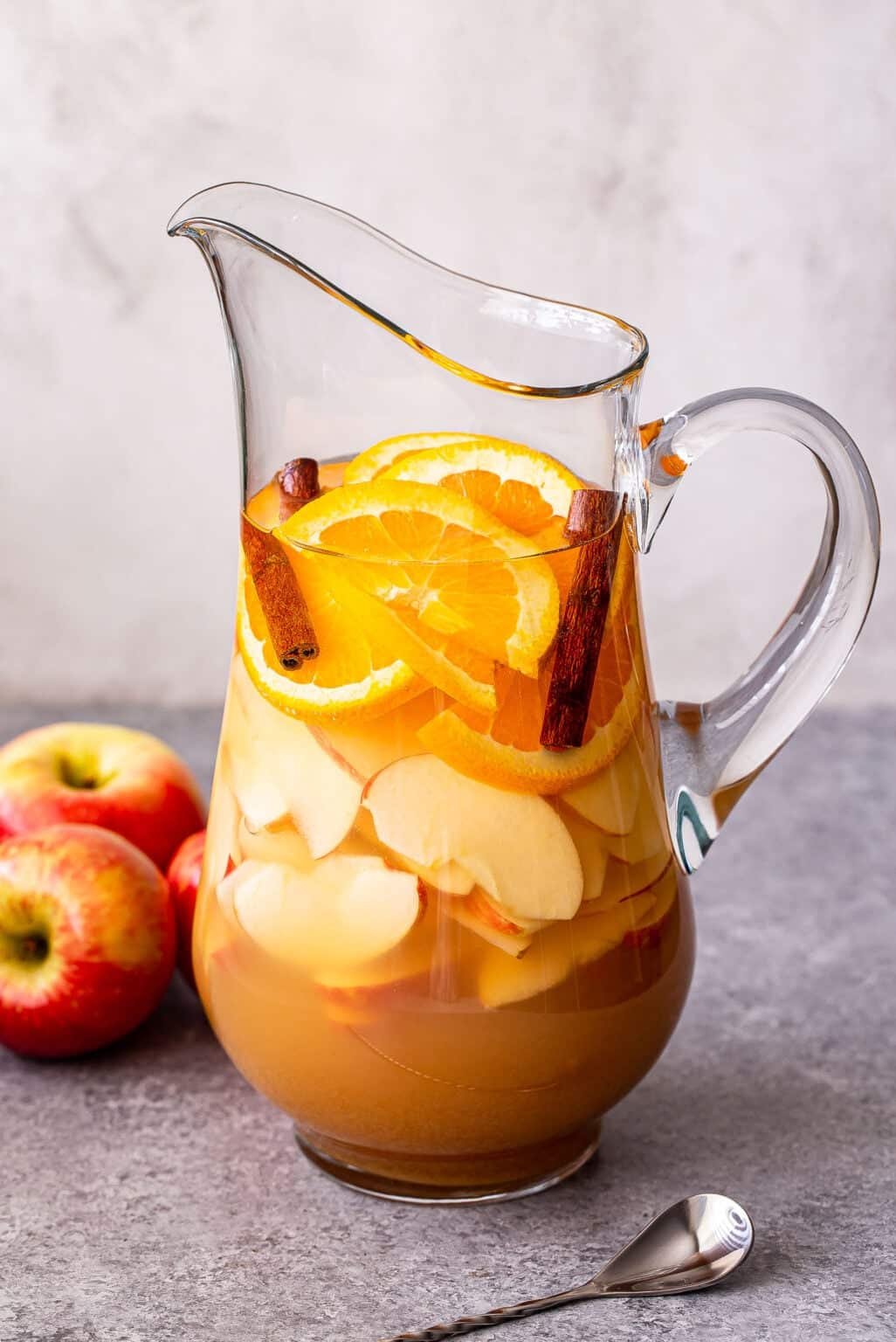
Apple cider sangria recipe
Apple cider sangria is what happens when autumn’s favorite drink meets the world’s most sociable cocktail. Crisp wine, fresh apple cider, brandy, fall fruits, and warm spices — combined in a pitcher, chilled until the flavors marry, and served over ice to a crowd of happy people. It’s the rare party drink that’s simultaneously easy, economical, gorgeous, and delicious. This guide gives you the classic recipe plus everything around it: how to choose the wine and cider, red/white/rosé variations, a non-alcoholic mocktail version, make-ahead timing, big-batch math, serving and garnish ideas, food pairings, and the mistakes to avoid. One pitcher serves a party; the knowledge serves you every fall for years.
Why Apple Cider Sangria Is Fall’s Perfect Party Drink
Sangria was practically designed for entertaining, and the apple cider version is fall’s ideal expression. It scales effortlessly — a pitcher serves eight, a drink dispenser serves thirty, and the recipe math is simple multiplication. It’s economical: the wine doesn’t need to be expensive (in fact, it shouldn’t be), and cider and seasonal fruit are cheap in autumn. It’s make-ahead by nature — sangria improves with a few hours of chilling, so you’re not playing bartender during your own party. It’s beautiful: jewel-toned liquid, floating fruit, cinnamon sticks — the pitcher is decor. And it’s forgiving: proportions are guidelines, not chemistry, so you can adjust sweetness, strength, and fruit to taste. Few drinks check this many party boxes at once.
Ingredients: What You’ll Need
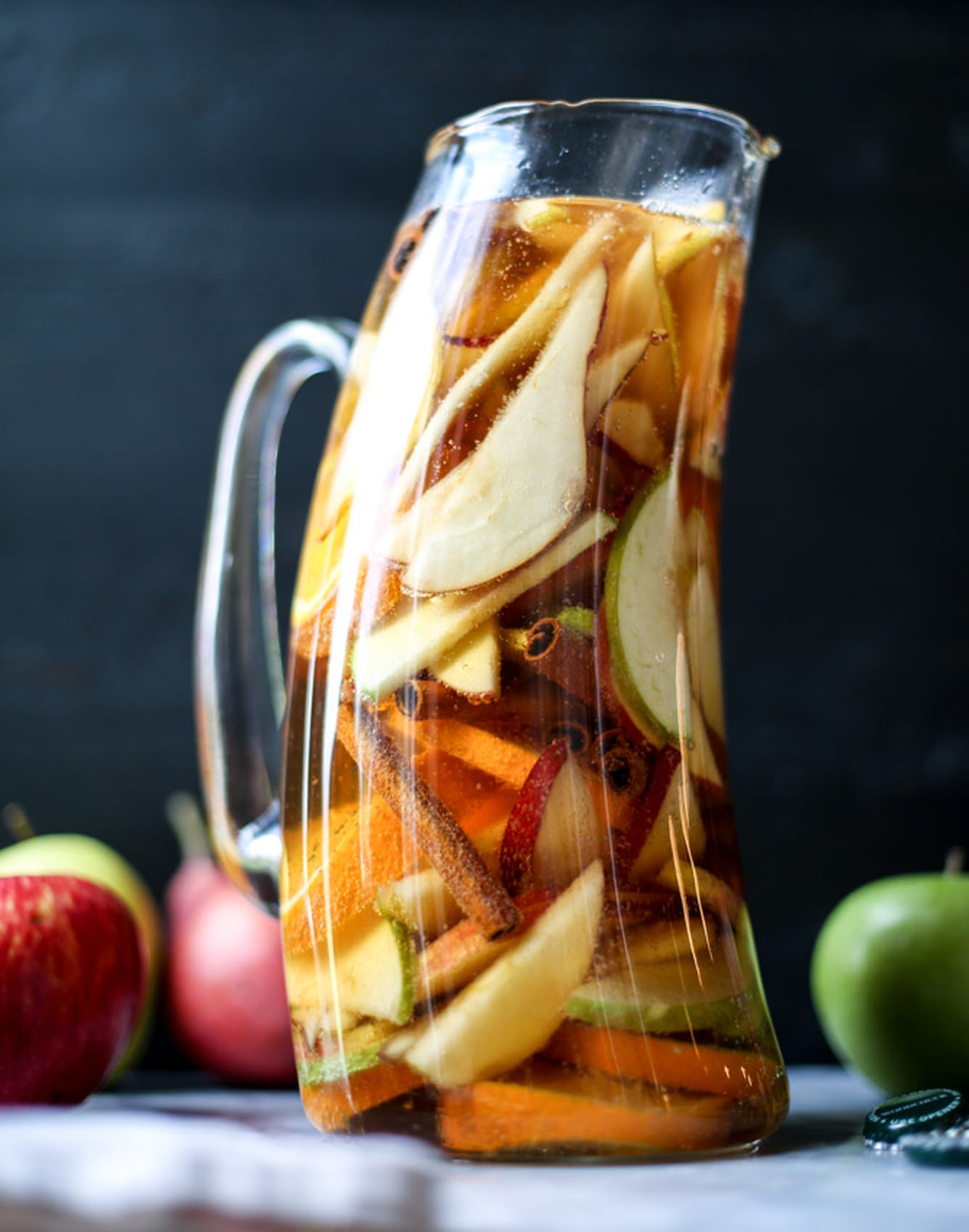
The classic apple cider sangria formula: 1 bottle (750ml) of wine, 2 cups fresh apple cider, 1/2 cup brandy (or apple brandy for extra apple intensity), 1/4 cup orange liqueur (optional but lovely), 2-3 tablespoons maple syrup or honey (to taste), 2 apples (sliced thin), 1 pear (sliced), 1 orange (sliced into wheels), 3-4 cinnamon sticks, 4-6 whole cloves, and 2 star anise (optional, for visual drama). For serving: ice, and club soda or ginger beer for topping individual glasses. That’s the whole list — wine, cider, spirits, sweetener, fruit, spices. Everything is available at a standard grocery and liquor store. The only ingredient worth seeking out specifically is good fresh cider (see below); everything else is flexible.

Choosing the Right Wine (Red vs. White)
The wine question has no wrong answer, only different sangrias. White wine (Pinot Grigio, Sauvignon Blanc, unoaked Chardonnay) makes a lighter, crisper sangria where the apple shines — the crowd-pleaser choice. Red wine (Merlot, Garnacha, Pinot Noir, Tempranillo) makes a deeper, cozier sangria with beautiful ruby-amber color — the autumn-evening choice. Rosé splits the difference: pretty pink-amber hue, medium body. The golden rule: use wine you’d drink on its own, but don’t waste money — the $10-14 range is perfect. Avoid heavily oaked wines (oak fights the fruit) and anything tannic and harsh (sangria won’t fix bad wine, it just dilutes it). Dry to off-dry wines work best since you’re adding sweetener to taste. When in doubt, start with white — it’s the most forgiving.

The Best Apple Cider to Use
Cider quality makes or breaks this sangria, so choose deliberately. Fresh, unfiltered apple cider — the cloudy kind from orchards and farmers markets — has the richest apple flavor and the beautiful opacity that makes the sangria look like autumn in a glass. Pasteurized grocery-store cider (like the common half-gallon jugs) works perfectly well; it’s consistent and safe. Avoid “apple juice” labeled products — they’re filtered, sweeter, and one-dimensional. Hard cider is a different ingredient entirely (see variations). If your cider is very sweet, reduce the added sweetener; if tart, add a touch more maple syrup. Taste your cider before building — it’s the dominant flavor, so the sangria can only be as good as the cider you pour.

Step-by-Step: Building Your Sangria
Assembly takes ten minutes. (1) Slice your fruit: thin apple and pear slices, orange wheels — thin slices infuse better and look prettier than chunks. (2) In a large pitcher, combine the wine, cider, brandy, and orange liqueur. (3) Add sweetener to taste — start with 2 tablespoons, stir, taste, adjust. Remember the fruit adds sweetness over time. (4) Add the fruit and spices, pushing them down into the liquid. (5) Refrigerate at least 4 hours, ideally 8-12 — this infusion time is when the magic happens. (6) Before serving, taste again and adjust sweetness or add a splash more brandy. (7) Serve over ice, topping each glass with a splash of club soda or ginger beer for fizz. Garnish with an apple slice and cinnamon stick. That’s it — the hardest part is waiting.

The Fruit: Apples, Pears, Citrus, and More
Fruit does triple duty: flavor, beauty, and the boozy snack at the bottom of the glass. Apples are mandatory — use firm, flavorful varieties (Honeycrisp, Gala, Fuji) that hold their shape; slice thin so they infuse and don’t turn to mush. Pears add floral sweetness; choose firm ones. Oranges (wheels or wedges) contribute citrus brightness that keeps the sangria from tasting flat. Beyond the classics: cranberries (fresh, for tartness and gorgeous color), pomegranate arils (jewel-like and delicious), and sliced persimmons when in season. Avoid mushy fruits (bananas) and anything that browns unappealingly. Cut fruit just before adding to minimize browning, and know that sangria fruit is meant to be eaten — put out small forks or encourage guests to fish out the brandy-soaked apples. They’re the best part.

Sweeteners: When and What to Add
Sweetener is a tuning knob, not a fixed ingredient — the right amount depends on your cider, wine, and taste. Maple syrup is the fall-perfect choice: its caramel notes complement apple and spice beautifully. Honey works well (warm it slightly to dissolve in cold liquid). Brown sugar simple syrup (equal parts brown sugar and hot water, cooled) dissolves instantly and adds molasses depth. Start with less than you think — 2 tablespoons per pitcher — because fruit sweetness develops during chilling. Taste after the chill, then adjust; it’s easy to add, impossible to remove. If you overshoot, add more wine or a squeeze of lemon to rebalance. For a drier sangria, skip sweetener entirely and let the cider carry it. There’s no virtue in unsweetened or extra-sweet — only in balanced.
Spices That Make It Taste Like Fall
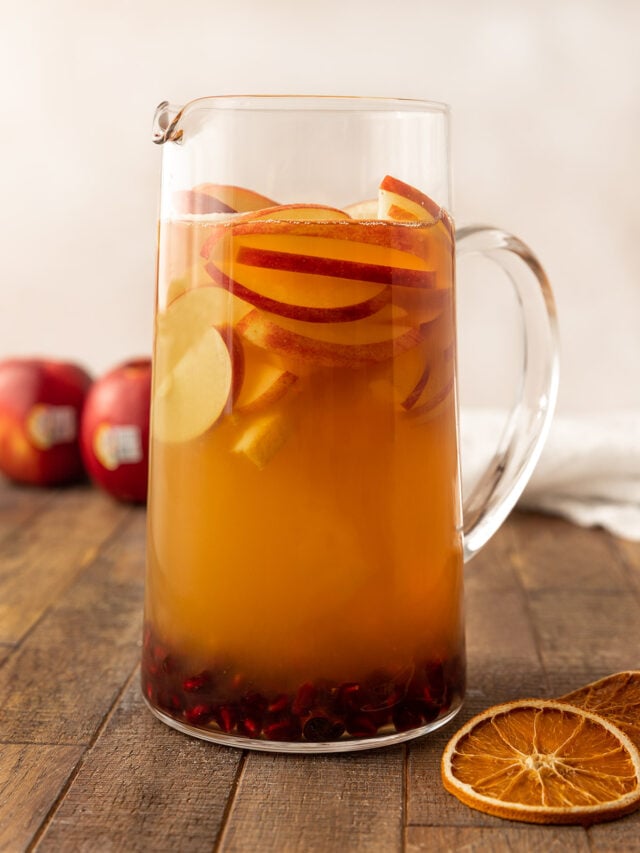
Spices are what separate apple cider sangria from “wine with apple juice.” Cinnamon sticks are essential — 3-4 per pitcher, and they double as stirrers and garnishes. Whole cloves (4-6) add warm depth; press them into an orange wheel for a classic pomander look that infuses beautifully. Star anise contributes subtle licorice notes and looks stunning floating in the pitcher (use 1-2; it’s potent). A few allspice berries or a grating of fresh nutmeg round things out. Add spices at the start so they infuse during chilling. One caution: ground spices cloud the sangria and create sediment — always use whole spices. Remove star anise before serving if you like (or leave for drama). The spice level should whisper fall, not shout chai — restraint keeps it refreshing rather than heavy.
Adding Bubbles: Sparkling Variations
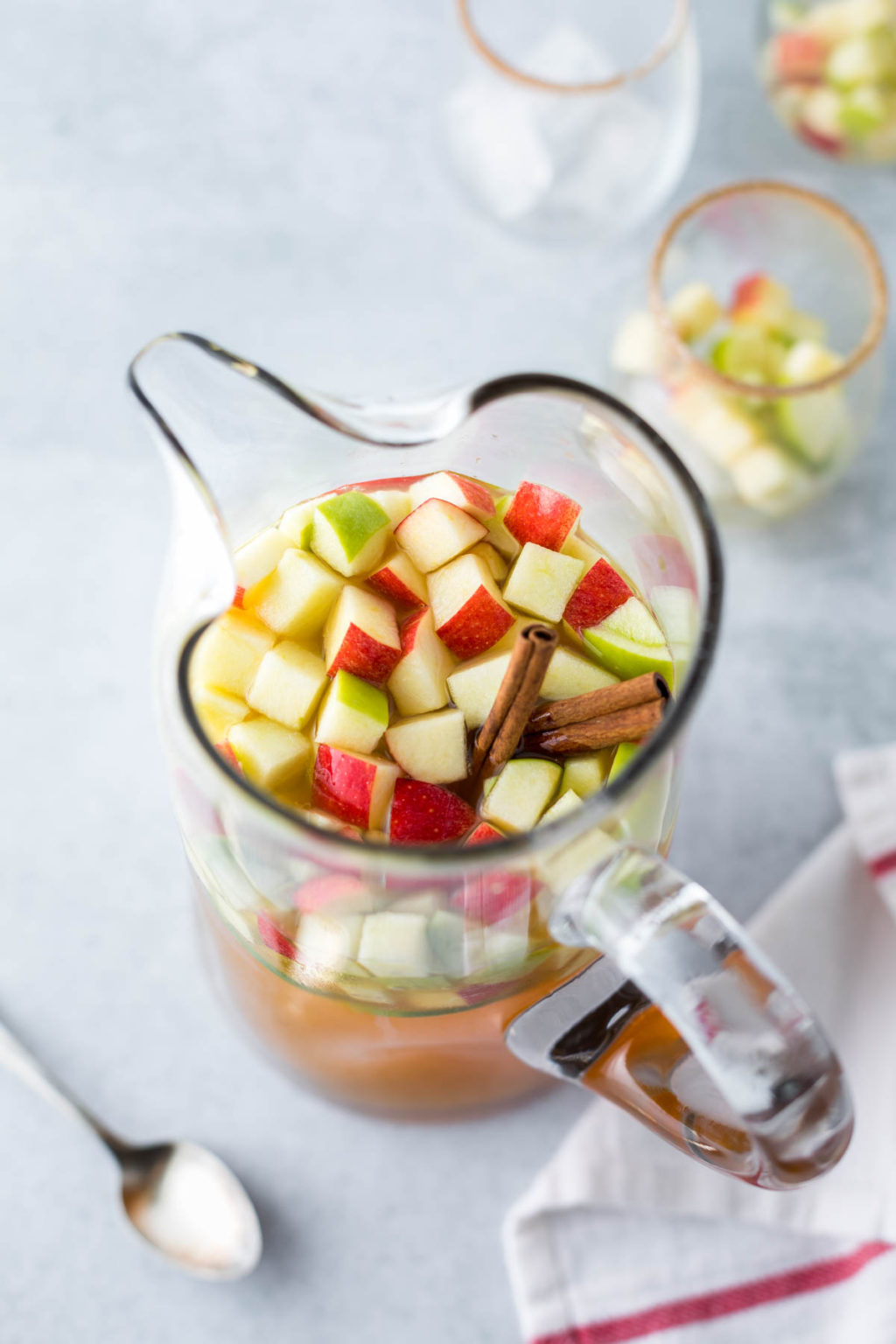
A splash of fizz transforms sangria from delicious to celebratory. The standard method: top each glass (not the pitcher) with club soda, ginger ale, or ginger beer just before serving — adding bubbles to the pitcher wastes the carbonation within the hour. Ginger beer is the standout choice: its spice echoes the fall flavors and its sweetness balances the wine. For a fully sparkling sangria, build the base (wine, cider, brandy, fruit, spices) and chill, then add chilled Prosecco or Cava to the pitcher just before serving — use a 2:1 ratio of base to sparkling wine. Hard apple cider as a topper doubles down on apple flavor with built-in bubbles. Whatever the bubble source, keep it cold — warm fizz goes flat instantly. Bubbles also lighten the drink, making it more sessionable for long parties.

Make-Ahead Magic: Why Sangria Needs Time
Sangria is one of the few cocktails that’s better made ahead — the chilling time isn’t just convenience, it’s chemistry. Four hours minimum lets the fruit release juices and the spices infuse; 8-12 hours (overnight) is the sweet spot where flavors fully marry. Beyond 24 hours, fruit starts breaking down and the texture suffers — so overnight is ideal, two nights is the limit. Prep timeline for a Saturday party: slice fruit and build the pitcher Friday evening, refrigerate overnight, taste and adjust Saturday afternoon, add bubbles at serving time. The fruit will have absorbed wine and released flavor; the spices will have perfumed everything. This make-ahead nature is sangria’s entertaining superpower: when guests arrive, you’re pouring, not mixing. The pitcher does the work while you enjoy your own party.

Serving: Pitchers, Glasses, and Garnishes
Presentation turns good sangria into a memorable one. Serve from a clear glass pitcher or drink dispenser so the fruit and color show — the visual is half the appeal. Use large wine glasses or stemless glasses over plenty of ice; sangria dilutes as it sits, so big ice cubes (slower melting) are better than small ones. Garnish each glass: an apple slice on the rim, a cinnamon stick stirrer, a few cranberries dropped in. Set out a small dish for discarded fruit… actually, provide cocktail forks — guests will want the brandy-soaked fruit. For outdoor parties, a covered dispenser with a spigot keeps bugs out and lets guests serve themselves. Keep a backup pitcher chilled in the fridge; when the first runs low, the refill is instant. Label it if you’re also serving mocktails — more on that below.

Big-Batch Recipe for Parties
Scaling sangria is simple multiplication with a few practical notes. For 20 guests (assuming 2 glasses each): 3 bottles wine, 6 cups cider, 1.5 cups brandy, 3/4 cup orange liqueur, 6 tbsp maple syrup (adjust to taste), 6 apples, 3 pears, 3 oranges, 10 cinnamon sticks, spices tripled. Mix in a large drink dispenser or two big pitchers. Fruit-to-liquid ratio matters more than exact math — keep the pitcher generously fruity. For 30+: consider a 3-gallon dispenser and recruit a friend for fruit-slicing duty (an assembly line goes fast). Buy ice in bulk — sangria parties go through astonishing amounts. Set up a self-serve station with glasses, ice bucket, bubble toppers, and garnishes so you’re not pouring all night. One caution: sangria’s fruity smoothness hides its strength — it drinks like juice but isn’t. Serve food alongside, always.

A Non-Alcoholic Apple Cider Sangria (Mocktail)
Every party needs a stellar non-alcoholic option, and this mocktail doesn’t taste like a consolation prize. Build it the same way: 4 cups fresh apple cider, 2 cups white grape juice or non-alcoholic white wine, 1 cup ginger beer (added at serving), sliced apples, pears, oranges, cranberries, cinnamon sticks, and cloves. Chill 4+ hours for infusion, then top glasses with ginger beer for fizz. The white grape juice adds the wine-like body; the ginger beer adds complexity. Serve it in the same style of pitcher and glasses as the alcoholic version so non-drinkers feel included, not singled out — and label both clearly. This mocktail is also the kid-friendly version (skip any wine substitutes, just use juices). Make a full batch; it disappears as fast as the real thing, often faster.

White Wine Apple Cider Sangria Variation
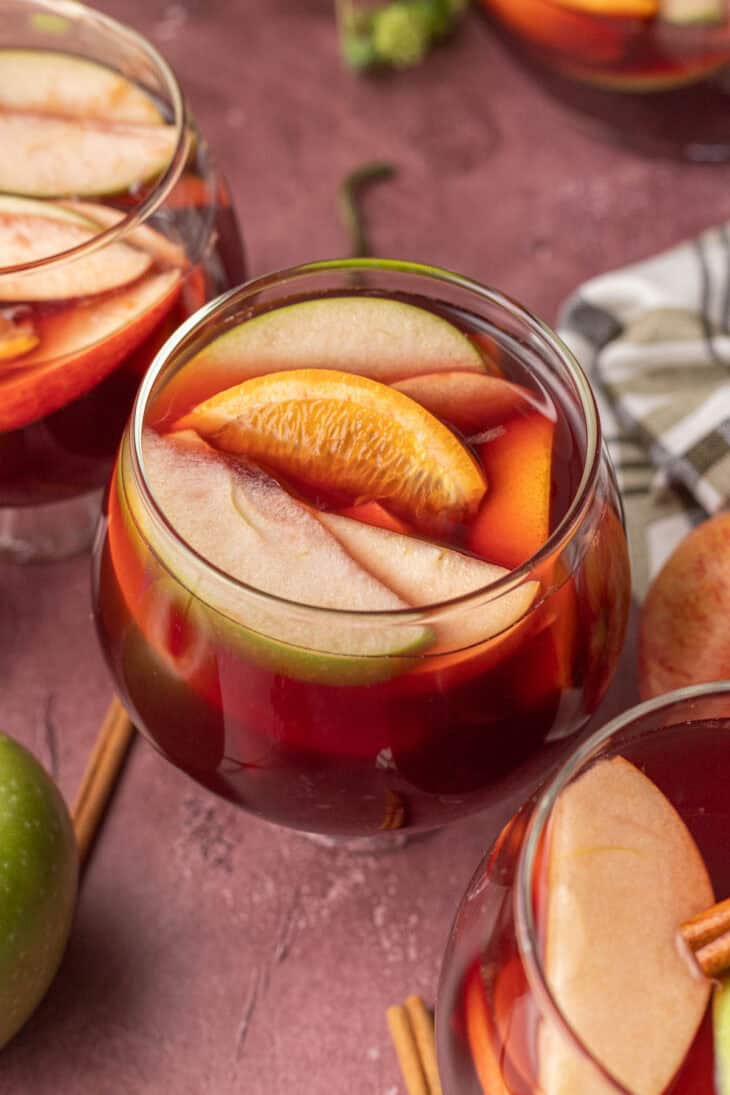
The white wine version is the brightest, crispest sangria — the one that converts sangria skeptics. Use Pinot Grigio or Sauvignon Blanc, fresh cider, apple brandy (or regular brandy), a touch of maple syrup, and fruit leaning light: apples, pears, green grapes, and lemon wheels instead of orange. Skip the cloves (they can dominate delicate white wine); keep cinnamon and add a vanilla bean or strip of lemon peel for complexity. The result is golden, refreshing, and dangerously drinkable — it tastes like the best parts of fall without any heaviness. This is the ideal Thanksgiving or Friendsgiving sangria: it pairs with turkey and sides beautifully and appeals to white-wine drinkers. Top with Prosecco for the sparkling version.

Red Wine Apple Cider Sangria Variation
Red wine apple cider sangria is autumn in its coziest form — deep amber-ruby, spiced, and warming. Use a fruity, low-tannin red: Garnacha, Merlot, or Pinot Noir. The cider and brandy remain the same; increase the spices slightly (an extra cinnamon stick, a few more cloves) since red wine stands up to bolder seasoning. Fruit: apples, oranges, cranberries, and pomegranate arils — the red fruits echo the wine’s color beautifully. A splash of orange liqueur is particularly good here. This version looks stunning in the pitcher — that deep jewel tone with floating fruit is pure fall. Serve at cool room temperature or lightly chilled (not ice-cold; reds show better with less chill). It’s the sangria for bonfires, Halloween parties, and long November dinners.
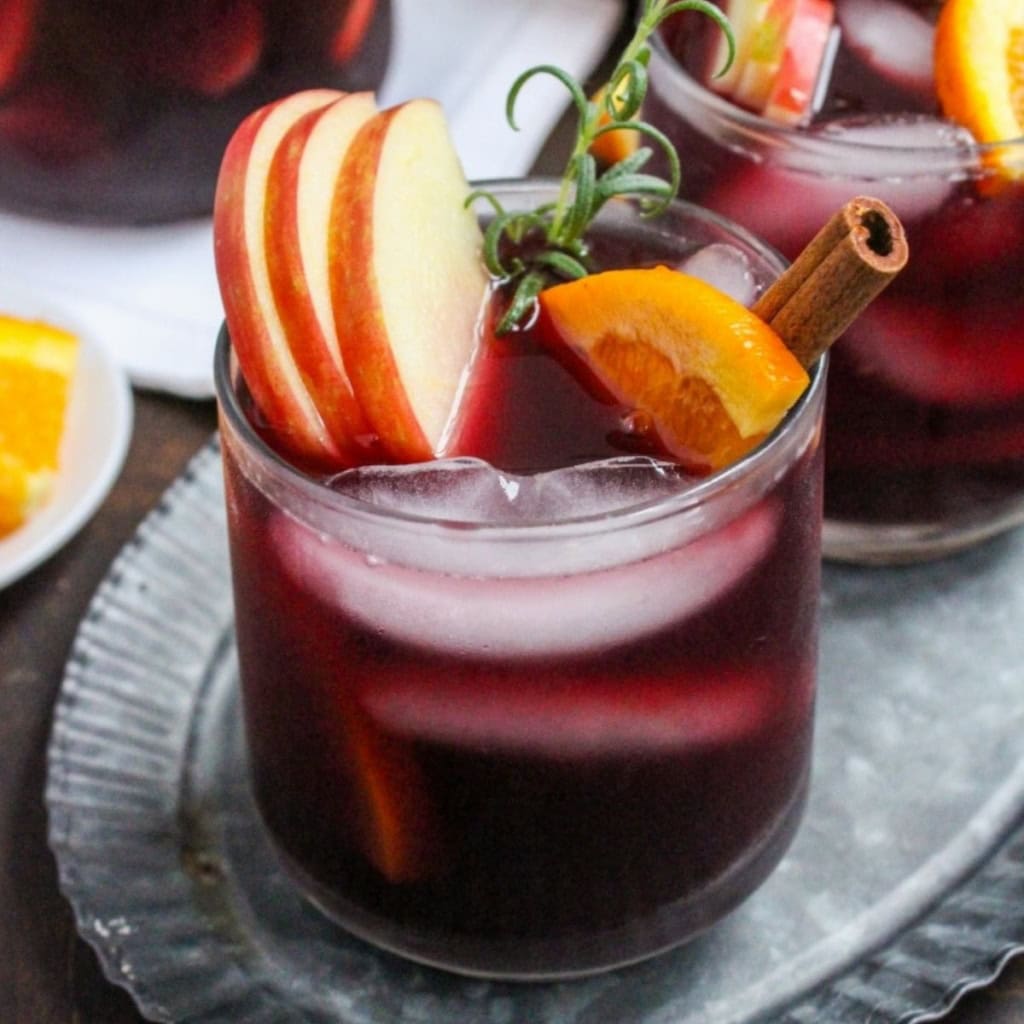
Rosé Apple Cider Sangria for a Lighter Take
Rosé sangria is the wildcard that shouldn’t work but absolutely does. A dry rosé plus apple cider creates a gorgeous blush-amber drink that’s lighter than red, more interesting than white. Add a splash of elderflower liqueur or a little extra orange liqueur for floral notes, keep the fruit pretty (apples, raspberries, orange wheels), and go easy on the heavy spices — one cinnamon stick and a star anise for looks. Top with sparkling rosé or Prosecco. This is the bridal-shower, birthday-brunch, golden-hour sangria — the one people photograph most. It proves sangria isn’t just a summer drink or a winter drink; with cider in the mix, rosé carries fall beautifully. Don’t overthink it: if you like rosé and you like cider, you’ll love this.

Common Mistakes to Avoid
Sangria is forgiving, but these mistakes are worth dodging. One: using expensive wine — the fruit and cider mask nuance, so save the good bottles for drinking straight. Two: skipping the chill time — uninfused sangria tastes like its components, not like sangria. Three: adding bubbles to the pitcher — they go flat; top individual glasses instead. Four: using ground spices — they make cloudy, gritty sangria; whole spices only. Five: over-sweetening upfront — fruit adds sugar during chilling, so sweeten conservatively and adjust later. Six: mushy fruit — cut fruit fresh, use firm varieties, and don’t infuse past 24 hours. Seven: forgetting ice and dilution — sangria served warm and neat is intense; ice and toppers are part of the recipe. Avoid these and your sangria is essentially foolproof.

Food Pairings: What to Serve Alongside
Sangria’s fruity acidity makes it a versatile food partner. Cheese boards are the natural match — manchego, aged cheddar, brie, and blue cheese all love sangria’s fruit and acid. Charcuterie: prosciutto, salami, chorizo. Fall appetizers: the pumpkin cheese ball (of course), baked brie with apples, butternut squash soup shooters, caramelized onion tarts. For heartier fare: roast chicken, pork tenderloin with apples, Thanksgiving dinner itself. Desserts: apple pie, pear tart, pumpkin bars — the sangria’s fruit echoes the dessert’s flavors. The pairing principle: sangria’s sweetness and acidity cut richness, so pair it with rich, salty, fatty foods and let the contrast work. Set the sangria station next to the appetizer table and let guests discover the combinations themselves. As a rule of thumb, if a dish feels heavy or salty on its own — think bacon-wrapped dates, sharp cheeses, or sausage rolls — it will taste even better with a cold glass of sangria alongside.
Storing Leftovers
Leftover sangria (if you’re lucky enough to have any) keeps well short-term. Strain out the fruit and spices — they’ve given their all and will turn mushy and bitter if left. Store the liquid in a sealed pitcher or jars in the refrigerator for up to 3 days. The flavor actually holds nicely; give it a stir and taste before re-serving, adding a splash of fresh cider or wine to brighten it. Don’t add fresh bubbles until serving. Leftover sangria fruit, strained and chopped, makes an excellent boozy topping for vanilla ice cream or pound cake — waste nothing. If the sangria tastes flat on day two, a squeeze of fresh lemon or orange and a topper of ginger beer revives it completely. Sangria rarely survives to leftovers, but now you’re prepared.
Recipe Card: Classic Apple Cider Sangria
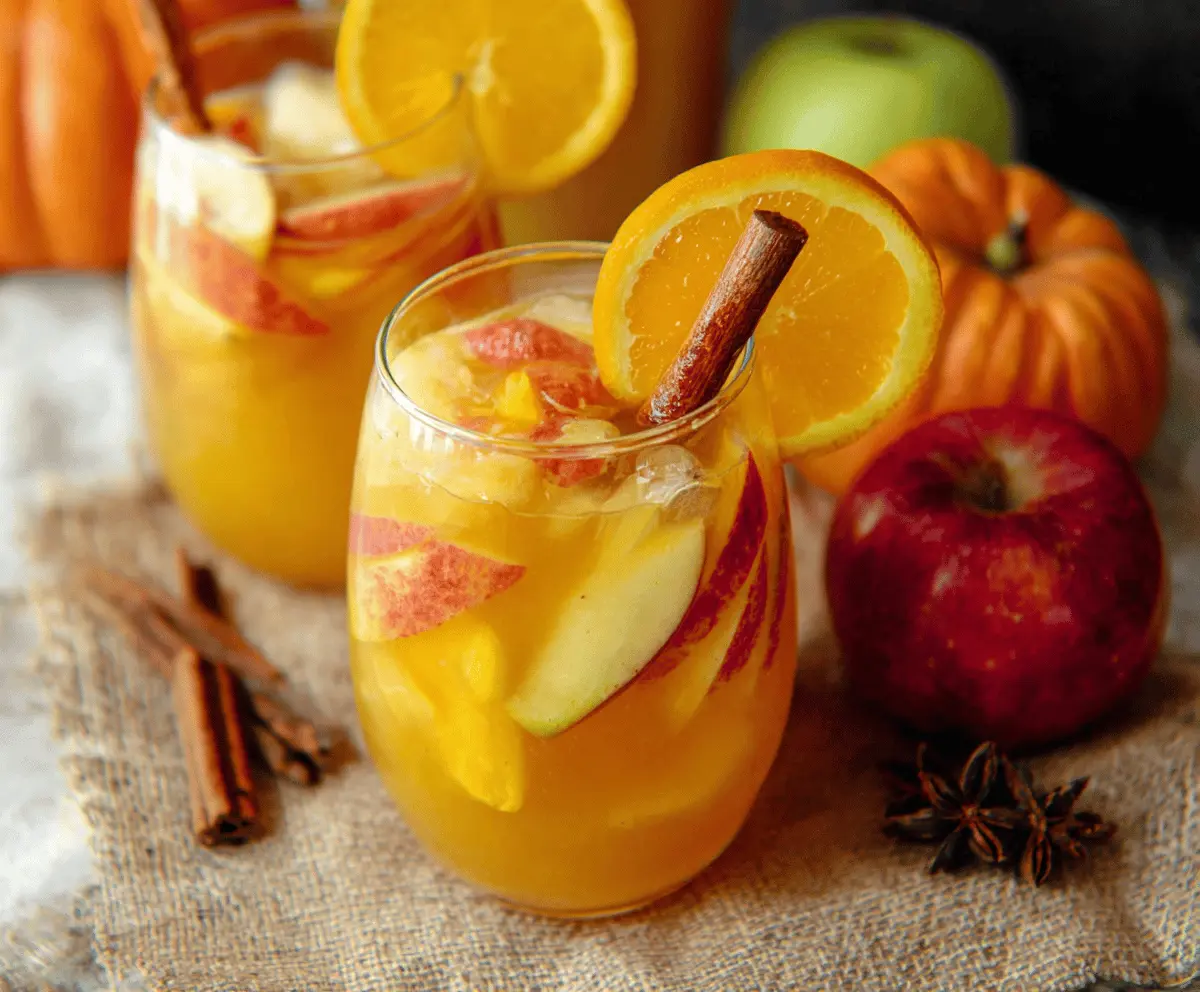
Here’s the complete classic recipe. Ingredients: 1 bottle (750ml) Pinot Grigio or Sauvignon Blanc, 2 cups fresh apple cider, 1/2 cup brandy, 1/4 cup orange liqueur, 2-3 tbsp maple syrup (to taste), 2 apples (thinly sliced), 1 pear (thinly sliced), 1 orange (sliced into wheels), 3 cinnamon sticks, 5 whole cloves, 1 star anise. For serving: ice, club soda or ginger beer. Instructions: (1) Combine wine, cider, brandy, liqueur, and 2 tbsp maple syrup in a large pitcher; stir. (2) Add fruit and spices, submerging everything. (3) Refrigerate 8-12 hours. (4) Taste; adjust sweetness. (5) Serve over ice, topped with club soda or ginger beer; garnish with apple slice and cinnamon stick. Serves 8. Prep: 10 min + chilling. For a crowd, multiply — see big-batch notes above. Cheers to fall.

Apple cider sangria is more than a recipe — it’s a fall entertaining strategy. One pitcher, ten minutes of assembly, and an overnight chill produce a drink that’s beautiful, delicious, economical, and effortlessly scalable. Master the classic white version, then play with red, rosé, sparkling, and mocktail variations through the season. Keep cider in the fridge and spices in the cabinet, and you’re always one bottle of wine away from a party. Here’s to crisp air, good friends, and pitchers that never stay full for long. Once you’ve made it twice, you’ll never need the recipe again — it’ll live in your hands, ready for every autumn gathering.

I am Talha Sikandar, a professional writer with a passion for general blogging. With years of experience in content writing and research, I founded Meaniingly.com to deliver well-researched, informative, and user-friendly articles on diverse topics.