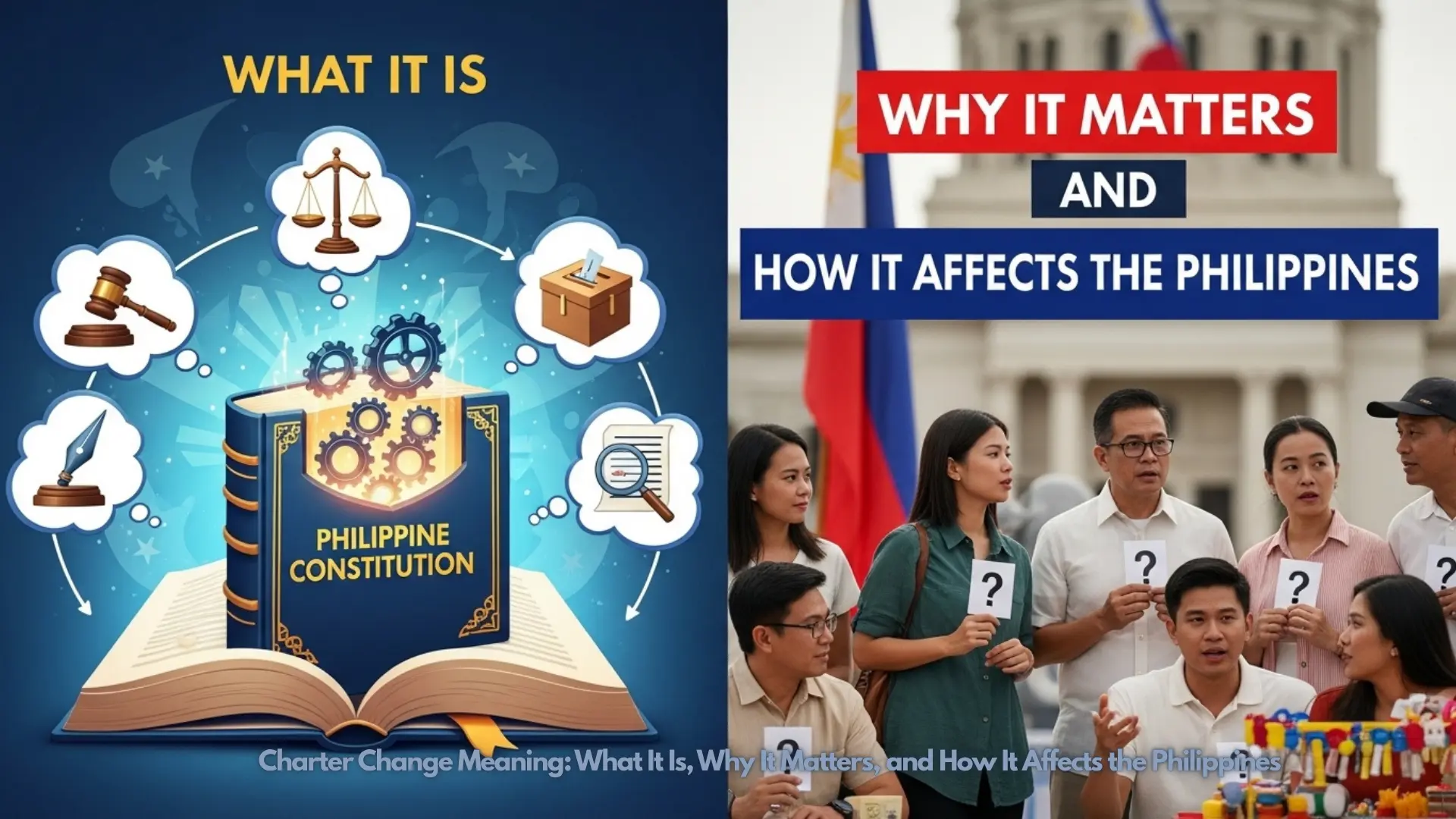
Charter Change, commonly known as Cha-Cha in the Philippines, refers to the process of amending or revising the Philippine Constitution. In simple terms, it means changing parts of the 1987 Philippine Constitution to reflect modern political, social, or economic needs.
The charter change’s meaning goes beyond legal wording—it can reshape how the government functions, how leaders are elected, and how policies affect everyday Filipino citizens. Because the Constitution is the country’s highest law, any constitutional reform has long-term consequences.
What Does Charter Change Mean in the Philippine Context?

In the Philippines, charter change usually focuses on economic charter change, such as relaxing foreign ownership limits, adjusting political structures, or reforming governance systems. These proposals aim to make the country more competitive globally.
However, many Filipinos closely watch charter change proposals because changes to the Philippine Constitution can also impact democracy, checks and balances, and citizens’ rights. This is why charter change explained clearly is essential for public understanding.
Why Charter Change Matters to Citizens
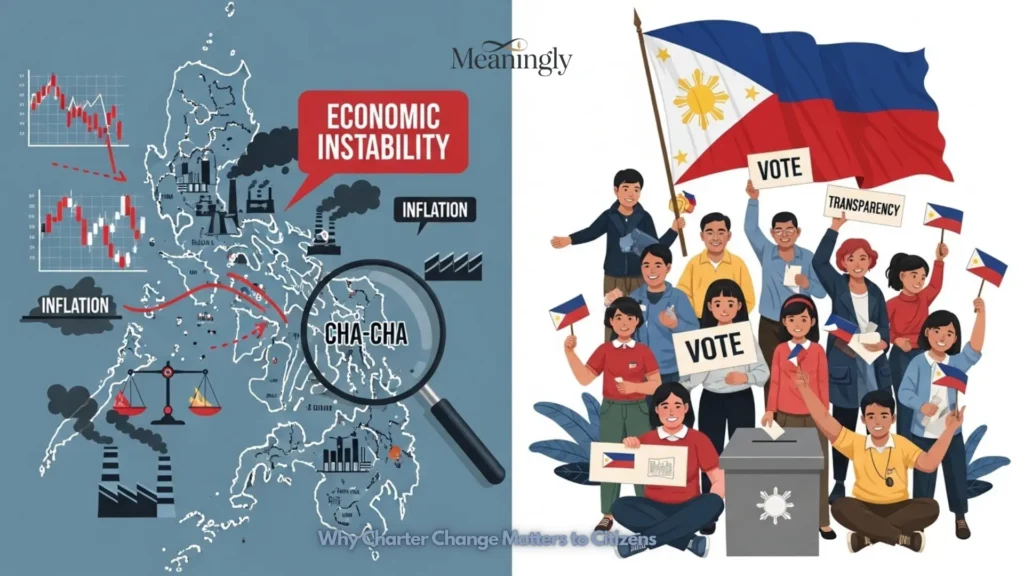
The importance of charter change lies in its direct effect on daily life—from job creation and foreign investment to political stability and accountability. Supporters believe a constitutional amendment can unlock economic growth and modernization.
On the other hand, critics warn that poorly managed constitutional reform in the Philippines could concentrate power or weaken democratic safeguards. This makes public awareness of the charter change’s meaning extremely important.
Why Cha-Cha Is a National Issue You Should Care About

Cha-Cha in the Philippines directly affects governance, democracy, and the economy. Changes to the 1987 Philippine Constitution can reshape political power, foreign investment rules, and citizens’ rights. That’s why understanding the charter change’s meaning matters to every Filipino.
Why Monitoring the Cha-Cha Process Is Important
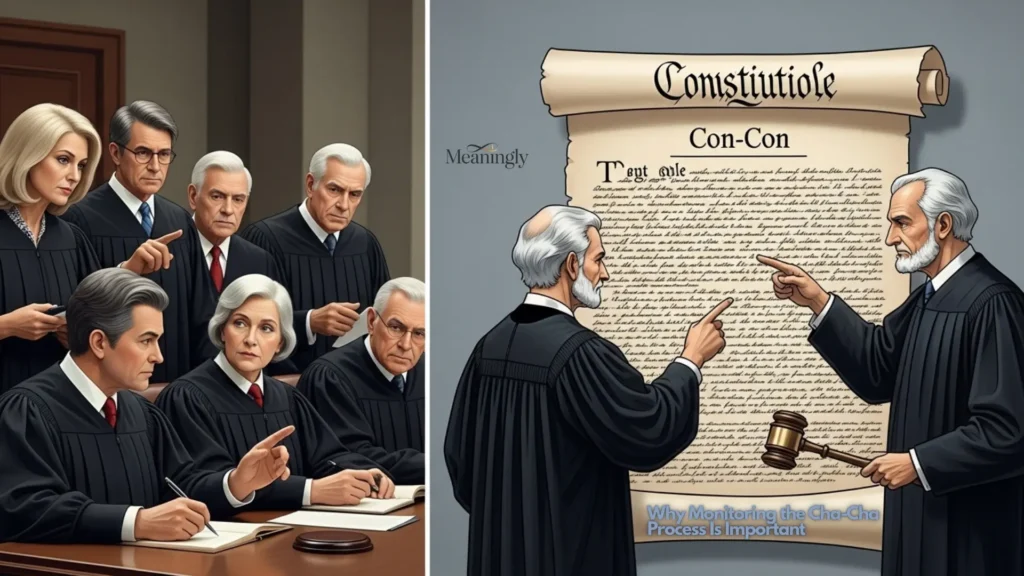
Closely tracking the charter change process ensures transparency and accountability. Without public oversight, constitutional reform risks favoring political elites over national interests, making monitoring Cha-Cha developments essential.
How the Philippine Constitution Can Be Amended
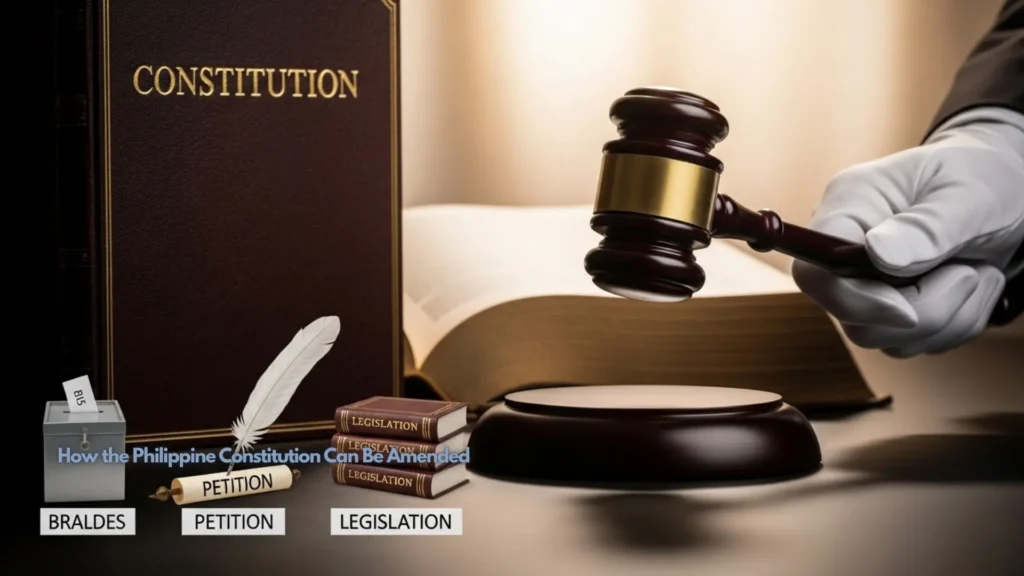
The Philippine Constitution allows amendments through Congress, a constitutional convention, or a people’s initiative. Each method follows strict legal procedures to protect the integrity of constitutional amendments.
Which Method Is Most Suitable for Constitutional Reform?
A Constituent Assembly is often considered the fastest method, while a Constitutional Convention is seen as more independent. Choosing the right path for constitutional reform in the Philippines affects credibility and public trust.
The Charter Change Process Explained Step by Step
The charter change process involves proposal, approval, and public ratification. Every stage plays a critical role in ensuring that Cha-Cha Philippines reflects democratic values.
Step 1: Proposal Stage (Congress, Convention, or People’s Initiative)
During this stage, amendments are proposed by lawmakers, delegates, or citizens. This step defines the scope of constitutional changes and sets the direction for economic charter change.
In a Constituent Assembly, members of Congress vote on proposed amendments. Debate continues over whether they should vote jointly or separately—an issue central to charter change legality.
Step 2: Ratification Stage and the Role of the Public
Once approved, proposals go to a national plebiscite. Filipino voters have the final say, making public participation vital in ratifying constitutional reform.
Most charter change proposals focus on economic provisions, political structures, and governance reforms. These proposed amendments aim to modernize the Philippine constitutional framework.
What Types of Constitutional Changes Can Be Implemented?
Changes may include economic liberalization, term adjustments, or shifts in government structure. Each constitutional amendment can significantly affect national policy and development.
What Citizens Should Watch Out For
Citizens should be alert to power concentration, weakened safeguards, and rushed amendments. Understanding the risks of charter change helps protect democratic institutions.
Why Public Awareness and Participation Matter
An informed public strengthens democracy. Active engagement in constitutional reform discussions ensures that Cha-Cha Philippines reflects the will of the people, not just policymakers.
Pros and Cons of Charter Change in the Philippines

| Aspect | Potential Benefits of Charter Change | Possible Drawbacks of Charter Change |
| Economic Growth | Economic Charter Change may relax foreign ownership limits, attracting foreign direct investment (FDI) and boosting the Philippine economy. | Critics warn that opening markets too quickly could disadvantage local Filipino businesses and SMEs. |
| Foreign Investment | Amending restrictive economic provisions can make the Philippines more competitive globally, especially in ASEAN markets. | There is concern that benefits may favor large corporations rather than ordinary citizens. |
| Job Creation | Increased investments could lead to job generation, higher wages, and improved infrastructure development nationwide. | Without safeguards, jobs created may be short-term or low-quality, offering limited long-term security. |
| Modernization of Laws | Constitutional reform in the Philippines can update outdated provisions written in 1987 to match today’s digital and global economy. | Opponents argue that existing laws—not the Constitution—should be fixed first. |
| Political Flexibility | Charter change (Cha-Cha Philippines) could improve governance structures and policy efficiency. | There are fears of power concentration, term extensions, or weakening of democratic checks and balances. |
| National Competitiveness | Supporters believe Cha-Cha reforms will help the Philippines compete with neighbors like Vietnam and Indonesia. | Sudden constitutional shifts may create political instability, affecting investor confidence. |
| Public Participation | A national plebiscite allows citizens to vote directly on proposed amendments. | Limited public awareness may lead to uninformed voting during the ratification stage. |
| Long-Term Development | Properly implemented charter change reforms could support sustainable growth and inclusive development. | Poorly planned reforms risk long-term social inequality and public distrust. |
Need-to-Know Questions:
What Is the Charter Change’s Meaning in the Philippines?
Charter change, meaning refers to amending or revising the 1987 Philippine Constitution to update political, economic, or governance provisions.
Why Is Charter Change Also Called Cha-Cha?
Cha-Cha Philippines is a shortened term for charter change, commonly used in media and public discussions about constitutional reform.
What Is the Main Purpose of Charter Change?
The goal of charter change is to modernize the Constitution, often focusing on economic charter change, governance efficiency, and national development.
Does Charter Change Affect the Philippine Economy?
Yes, economic charter change may relax foreign ownership limits to attract foreign direct investment (FDI) and boost the Philippine economy.
How Can the Philippine Constitution Be Changed?
The Philippine Constitution can be amended through Congress acting as a Constituent Assembly, a Constitutional Convention, or a People’s Initiative.
Who Decides If Charter Change Is Approved?
Final approval comes from Filipino voters through a national plebiscite, making public participation essential in constitutional reform in the Philippines.
Why Are Some Filipinos Concerned About Charter Change?
Critics fear charter change could weaken democratic safeguards, enable power concentration, or benefit political elites if not carefully monitored.
Conclusion: Charter Change Meaning
In conclusion, the charter change meaning refers to the process of amending or revising the 1987 Philippine Constitution to address modern political, economic, and governance needs. In the context of the Philippines, Cha-Cha (Charter Change) is often discussed as a way to enable economic charter change, attract foreign investment, and strengthen national competitiveness. However, understanding constitutional reform in the Philippines is essential so citizens can actively participate, stay informed, and ensure that any changes truly serve the public interest and protect democratic values.

Anna Alesa is an experienced content writer with over 4 years of expertise in creating high-quality articles for meaning-based websites.