Discover the meaning of AER (Annual Equivalent Rate), how it works, and why it matters for savings and loans. Learn how AER helps you compare interest rates accurately and make smarter financial decisions.
What Is AER? (Definition and Basics)
AER refers to the Annual Equivalent Rate, which shows the total interest you earn on savings over one year, including compound interest. It helps consumers understand the true annual return on savings accounts.
What Does AER Stand For in English?

AER stands for Annual Equivalent Rate, a standard financial term used by banks and financial institutions. It allows easy comparison of interest rates across different savings products.
Why Is AER Important for Savings and Investments?

AER interest rate is important because it reflects how often interest is compounded, giving a realistic view of earnings. It helps savers make smarter decisions when choosing high-interest savings accounts.
- AER Meaning Explained: A Complete Guide to Annual Equivalent Rate
- SCUML Meaning Explained: What It Is, Who Needs It, and How to Get Certified in Nigeria
- Charter Change Meaning: What It Is, Why It Matters, and How It Affects the Philippines
- HWY Meaning
- WLW Meaning
How Does AER Work?

AER works by combining the base interest rate with the effects of compounding over 12 months. The more frequently interest is added, the higher the AER savings rate appears.
How Is AER Calculated?
AER calculation depends on the interest rate and how often interest is compounded (monthly, quarterly, or annually). This ensures the rate accurately reflects yearly earnings.
What Is Compound Interest and How Does It Affect AER?
Compound interest means earning interest on both your savings and previously earned interest. This increases the Annual Equivalent Rate, making long-term savings more profitable.
What Does AER Mean in Savings Accounts?

In savings accounts, AER shows the actual return you’ll receive over a year. UK banks commonly use the AER savings rate to ensure transparency for customers.
| Aspect | Explanation |
| Pros of Using AER | AER (Annual Equivalent Rate) makes it easy to compare savings accounts because it includes compound interest, showing the true yearly return. It improves transparency in UK banking and helps savers identify high-interest savings products quickly. |
| Cons of Using AER | A limitation of the AER interest rate is that it assumes money stays untouched for a full year, which may not suit short-term savers. It also doesn’t account for withdrawal limits or variable interest changes. |
AER vs Gross Interest Rate: What’s the Difference?
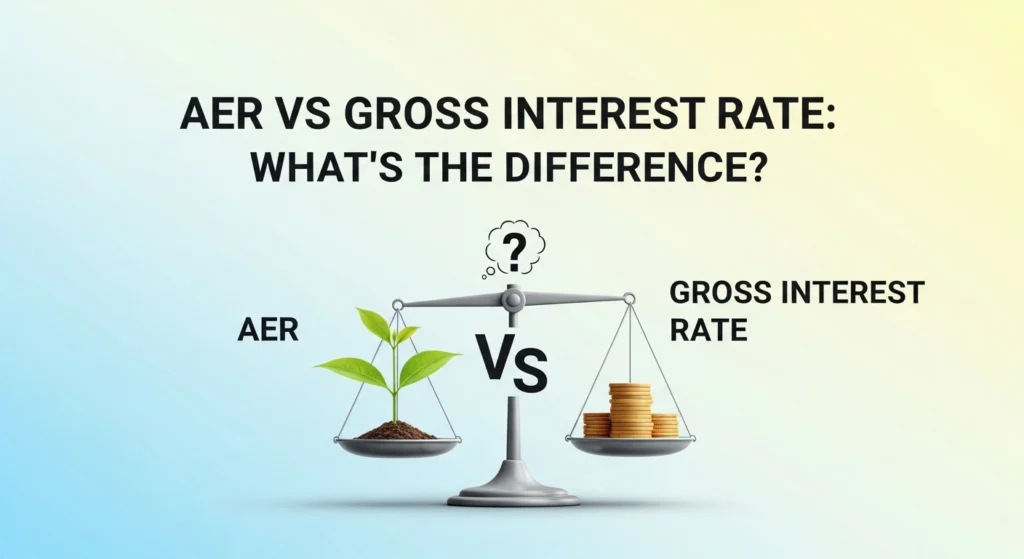
AER vs gross interest rate differs because AER includes compounding, while gross interest shows only the basic rate. AER provides a more accurate comparison for savers.
How AER Helps You Compare Savings Products

AER comparison allows savers to quickly identify the best savings accounts without complex calculations. It simplifies decision-making for UK and global banking customers.
Questions You Might Have:
What Is the Meaning of AER?
AER refers to Annual Equivalent Rate, which shows the total yearly interest earned on savings, including compound interest.
What Does AER Stand For in Banking?
In banking, AER stands for Annual Equivalent Rate, a standard way banks display savings interest rates transparently.
Why Is AER Important for Savings Accounts?
AER interest rate helps savers understand the true annual return and compare high-interest savings accounts easily.
How Does AER Work in Simple Terms?
AER works by factoring in how often interest is compounded, giving a realistic picture of yearly earnings.
Is AER Better Than Gross Interest Rate?
Yes, AER vs gross interest differs because AER includes compounding, making it more accurate for comparing bank savings products.
What Does AER Mean for Fixed and Easy-Access Savings?
For both fixed-rate and easy-access savings accounts, AER shows what you’ll earn over a year if funds remain untouched.
Is AER Used Only in the UK?
While AER is mainly used in UK banking, similar concepts apply globally to help consumers compare interest rates.
Conclusion

In conclusion, the AER meaning refers to the Annual Equivalent Rate, which shows the true yearly return on savings by including compound interest. Widely used in UK banking and global savings markets, AER interest rates help consumers accurately compare savings accounts and choose the best option for long-term financial growth. Understanding AER empowers savers to make informed, confident decisions about their money.

Anna Alesa is an experienced content writer with over 4 years of expertise in creating high-quality articles for meaning-based websites.