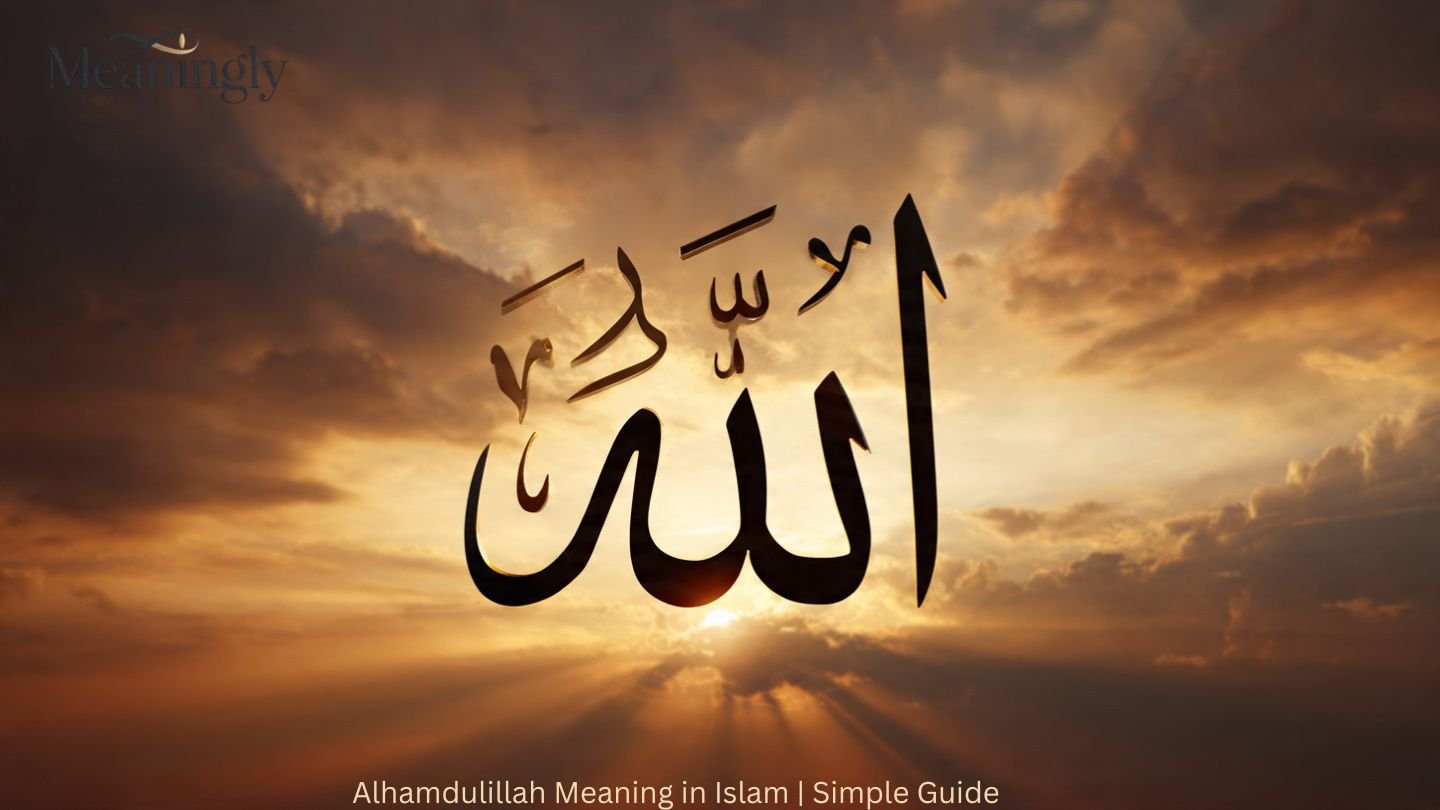
Alhamdulillah is a powerful Arabic phrase used by Muslims worldwide to express gratitude and praise to Allah. Understanding the meaning of Alhamdulillah helps you connect with Islamic teachings and use it correctly in daily life. This guide explains Alhamdulillah meaning, pronunciation, and common uses for people in Pakistan, India, and across the Muslim world.
Alhamdulillah Meaning and Pronunciation
Meaning of Alhamdulillah
Alhamdulillah (ٱلْحَمْدُ لِلَّٰهِ) is an Arabic phrase that expresses gratitude and praise to Allah. It reminds believers that every blessing, whether big or small, comes from Allah alone. Muslims around the world use Alhamdulillah daily to show thankfulness.
Meaning in English
In English, Alhamdulillah is translated as “All praise is for Allah” or “Praise be to God.” People say it to thank Allah in happy moments, tough times, or even after small achievements.
Meaning in Urdu
In Urdu, Alhamdulillah is written as اللہ ہی کی حمد ہے or اللہ کی تمام تعریفیں. It carries the same essence of heartfelt gratitude towards Allah and is widely used across Pakistan, India, and other Urdu-speaking communities.
Why This Phrase Holds Importance
Alhamdulillah is important because it connects a believer’s heart to Allah, reminding them of His mercy, control, and blessings.
It appears in the Quran at the start of Surah Al-Fatiha (1:2) as Alhamdulillahi Rabbil ‘Alamin, showing its spiritual significance in Islamic prayers.
Regular use of Alhamdulillah cultivates gratitude, humility, and trust in Allah’s wisdom.
Pronunciation of Alhamdulillah
How to Pronounce It
The correct pronunciation is al‑ham‑du lil‑lah. Saying it smoothly keeps the meaning intact and helps in proper Islamic recitation.
Pronunciation Video Reference
You can find proper pronunciation guides and videos online on YouTube and educational Islamic platforms.
Common Pronunciation Mistakes
Many people overemphasize “ham” or “lillah” or misplace syllables. The correct flow is smooth and natural: al‑ham‑du lil‑lah.
Variations of Alhamdulillah
Common Forms Used by Muslims
- Alhamdulillahi Rabbil ‘Alamin: Full verse from Surah Al-Fatiha
- Alhamdulillah after sneezing, meals, good news, or relief from hardship
Usage in Different Cultures
Pronunciation may slightly differ in Arab, South Asian, and Turkish communities but meaning stays the same.
Short Forms Often Used Online
- Alhamd
- Alhumdulillah
- Full spelling Alhamdulillah is common in transliterations.
Benefits of Saying Alhamdulillah
Spiritual and Daily Life Benefits
- Strengthens faith and mindfulness
- Encourages connection with Allah and constant remembrance
- Used widely in Muslim communities for mental peace and spiritual growth
How It Builds Gratitude
By regularly saying Alhamdulillah, believers shift focus from self to Allah, acknowledging all blessings in life. This is popular in countries like Pakistan, India, Bangladesh, and Middle Eastern regions.
Positive Impact on Mind and Heart
- Reduces arrogance and pride
- Cultivates contentment and calmness
- Improves emotional resilience in challenging times
- Boosts mental wellness through daily gratitude practices
When to Say Alhamdulillah

Situations in Daily Life
- After sneezing
- After meals
- When receiving good news
- Overcoming hardships
- Daily greetings
Times Mentioned in Islamic Teachings
- Part of Surah Al-Fatiha in prayer
- Recommended by Prophet Muhammad ﷺ after meals and sneezing
Moments of Blessings and Relief
Any time Allah provides health, safety, sustenance, success, or relief from hardship
Common phrase used globally by Muslims to express thankfulness
How to Reply to Alhamdulillah
Correct Islamic Response
- Usually no reply is required
- After sneezing: hearer says “YarhamukAllah”, sneezer replies “Yahdikumullah wa yuslihu balakum”
Alternative Responses in Daily Talk
- Smile or repeat Alhamdulillah in agreement
Why This Response Shows Respect
It acknowledges the gratitude of the speaker and follows proper Islamic etiquette
Alhamdulillah or MashAllah
When to Use Each Phrase
- Alhamdulillah: Expressing gratitude to Allah
- MashAllah: Appreciating someone else’s blessings without envy
Difference in Meaning
- Alhamdulillah focuses on thanking Allah
- MashAllah praises goodness or achievement in someone else
Common Mistakes People Make
- Using MashAllah when expressing personal gratitude
- Confusing Alhamdulillah and MashAllah in conversation
Frequently Asked Questions
1. What does Alhamdulillah mean?
Alhamdulillah means “All praise is for Allah” and is said to express gratitude for blessings in daily life.
2. How do you pronounce Alhamdulillah correctly?
It is pronounced al‑ham‑du lil‑lah with a smooth and natural flow to preserve its meaning.
3. When should I say Alhamdulillah?
Muslims say it after sneezing, meals, good news, or relief from hardship to show thankfulness to Allah.
4. What is the meaning of Alhamdulillah in English?
In English, Alhamdulillah is translated as “Praise be to God” or “All thanks to Allah.”
5. What is the Urdu meaning of Alhamdulillah?
In Urdu, it is written as اللہ ہی کی حمد ہے and reflects gratitude towards Allah for all blessings.
6. Can I say Alhamdulillah daily?
Yes, saying Alhamdulillah daily strengthens faith, mindfulness, and a positive mindset.
7. Is Alhamdulillah used in prayers?
Yes, it appears at the start of Surah Al-Fatiha and is recited regularly in Islamic prayers worldwide.
Conclusion
Alhamdulillah is a simple yet powerful phrase that connects Muslims to Allah through gratitude and praise. Understanding Alhamdulillah meaning and using it daily helps build faith, contentment, and spiritual awareness in Pakistan, India, and Muslim communities globally.

Anna Alesa is an experienced content writer with over 4 years of expertise in creating high-quality articles for meaning-based websites.